1. Municipality Profile
Key Economic Sectors
The municipality aspires to become the urban epicentre of creative and digital industries and the rural epicentre of knowledge-based bioeconomy and tourism. We safeguard our natural environment and are determined to become a zero-waste and climate positive municipality. And the establishment of Latvia’s first bioregion is an essential strategy in this regard. The development of Cēsis county is based on smart and sustainable management that promotes the uniqueness of natural values and preservation of diversity.
A total of 4655 enterprises are registered in Cēsis county. The most widely represented business sector in Cēsis county is agriculture (1144 enterprises). It is followed by retail and wholesale trade (568 enterprises), forestry (226 enterprises), transport and transportation (320 enterprises), construction and construction-related services (309 enterprises), accommodation and catering services (187 enterprises), real estate activities (139 companies), carpentry and carpentry services (136 companies), and several other less represented industries.
Governance Structure
Since the administrative-territorial reform in 2021, the municipality consists of 21 parishes. The municipality of Cēsis county works in accordance with the Law on Municipalities”. There are 19 deputies in the Cēsis County Council. The chairman of the council is the highest position, having 2 vice majors. The deputy chairperson of the council in matters of development, entrepreneurship and climate neutrality is responsible for development issues in the municipality.
2. Motivation for Climate Neutrality
Reasons for Action
Cēsis is constantly working on innovative solutions to strengthen the city’s climate resilience and adjust to the requirements of the climate change adaptation, while the city’s problem is its old town with limitations in the implementation of energy saving solutions, including deployment of renewable energy technologies. The municipality actively participates in the implementation of the European Green Deal, whose objectives include adaptation to climate change, climate neutrality, healthy waters, soil, and food. The municipality adheres to the green deal guidelines in its development activities and aids citizens and businesses for the implementation of green deal activities. According to the municipality’s Development program for 2022 – 2028, we seek to incorporate blue and green solutions in fifty percent of all municipally implemented initiatives.
The activities of Cesis Municipality are carried out in line with national, regional, and local strategic development documents. One of the goals of Latvia’s Sustainable Development Strategy until 2030 states that “The value of Latvia’s natural resources and the availability of natural environment provide a unique opportunity to develop green economy and sustainable consumption, to create and preserve Latvia’s image as a green country – an important part of the state’s international identification”.
Strategic Goals
On September 22, 2022, the municipality of Cēsis signed the Covenant of Mayors. On December 29, 2022, the Sustainable Energy and Climate Action Plan was approved. The plan includes energy and climate analysis of Cēsis town. The goal is to achieve CO2 savings of 50 % compared to 2000 by 2030.
According to the Integrated sustainable energy and climate action plan 2030, Cēsis County’s vision is to achieve climate-neutral county status by 2050. By 2030, Cēsis County undertakes to move towards the implementation of the principles of climate neutrality in the local and central heating supply of the county, to actively work on the renovation of multi-apartment and municipal buildings, as well as to continue to maintain a certified energy management system (EPS). At the same time, the local government will work on public education and wider implementation of the principles of climate neutrality in the entire county. The goals are set to promote the development and sustainability of the region, improve the quality of life and increase the well-being of the region’s residents.
3. Baseline Assessment
Data Collection Process
Data on heat energy and electricity consumption in municipal buildings (MWh/year) are available, as well as calculated specific energy consumption data (kWh/m²/year) in each building. Historical data is available. Data on the area of municipal buildings are available.
There are several boiler houses in the Cēsis county that do not have meters installed. Consumption accounting takes place after manual accounting of fuel. Installation of meters in places where this measuring equipment is not available is a priority for energy management.
Data on electricity consumption for public lighting are available (MWh/year), including in the largest sections (parks, traffic lights, fountains, etc.). Public lighting makes up about 3 % of the total municipal electricity consumption. Historical data is available. Upon request from the natural gas distribution system operator, data on natural gas consumption in municipal and state buildings is available.
Upon request, data on the electricity consumption of the household sector in the territory of the municipality is available from the distribution system operator (MWh/year). Upon request from the operator of the centralized heat supply system (municipal or private company), data on the consumption of centralized heat energy in the household sector in the territory of the county are available.
Data on natural gas consumption for heating and cooking are available upon request from the gas distribution system operator.
No data are available on decentralized heat/fuel consumption by households using biomass or fuels other than natural gas.
Upon request, data on the electricity consumption of the commercial and industrial sectors in the region are available from the distribution system operator. There is no data on the area of the buildings. The industrial sector is the largest consumer of natural gas in the territory of the municipality. Data on natural gas consumption in the industrial sector and the service sector are available in aggregate form upon request from the natural gas distribution system operator (MWh/year).
Large industrial companies must obtain polluting permits from the state and data on these companies is available from the state database. However, other companies do not have to provide the state or municipality with information on energy or fuel consumption.
Data on the municipal vehicle fleet (number of vehicles, type of fuel) are available. Cars, light trucks, mini buses, buses and other vehicles are used in the municipality. Fuel consumption and mileage data are available for municipality fleet.
Current data on the use of municipal transport, fuel consumption and mileage are available in the accounting department. 120 vehicles are included in the energy management system. In addition to municipal vehicles, there are leased vehicles that are not included in the energy management system.
Among the types of public transport in the city of Cēsis, there is public intra-city transport (with buses) and regional buses that connect the city with other areas. The public transport of the city is served by the joint-stock company CATA, from which data on fuel consumption, the number of transported passengers and passenger kilometers can be obtained upon request. Regional public transport with buses is provided by CATA and other companies.
Cēsis municipality territory is crossed by the national railway line Riga-Valka, on which both passenger and cargo diesel trains move. Information on the number of passenger train trips is available, but other data are not available.
Data on registered vehicles in the territory of Cēsis county, including by type of fuel, are publicly available from state databases. For example, in 2022, 35 electric cars were registered. Data on fuel consumption can only be obtained by calculation. It is possible to obtain information on the amount of fuel sold in the region from gas station operators upon request. There are 8 public electric car changing stations in the Cesis municipality, one for electric buses. In the future 15 more are planned to be installed.
Heat energy production
Both centralized and decentralized heat supply are used in the Cēsis district. More information is available about the city of Cēsis, which is the center of the county, than about the parishes. In the city of Cēsis, heat supply is provided by six centralized boiler houses. 75 % of heat energy is produced from RES. It is planned that it could increase to 85 % in 2030. Heat energy losses in networks is 15 %. Three-quarters of the centralized heat supply is consumed by multi-apartment buildings (residential sector). In the city of Cēsis, since 2015, all objects of centralized heat supply have been equipped with a remote data reading system. Customers have the opportunity to keep track of energy consumption data on the customer portal. Data on decentralized heat energy consumption in the private sector are not collected. Data on fuel consumption in decentralized boiler houses in the public sector are available from fuel procurement data.
Electricity production
Electricity in the district is mainly obtained from the grid. Previously, a cogeneration station also operated, but since 2017, electricity production in cogeneration is no longer taking place.
In some cases, individual electricity production takes place in households and in the public sector. Thanks to state support programs, intensive installation of solar panels for electricity production has begun. Data on solar panels installed in the household sector are not publicly available. In the public buildings sector, solar panels are installed with a total capacity of around 200 kW.
Data on the installed solar panels and the electricity produced must be requested from the distribution system operator. The municipality does not have information about the panels installed in the private sector, because their construction is not coordinated with the municipality.
The percentage of distribution of land, which includes forests, natural resources, and waters for Cesis. For agriculture, it is possible to gather data of livestock by type and quantity from the Agricultural Data Center, as well as data about aquaculture.
The CommitClimate survey has provided the municipality with important information about the energy consumption habits of the population. As well as the large number of respondents (155 answers), it shows that the public is interested in these issues, and they are important.
The results of the survey, which represent the habits of citizens in various sectors, are an important source of data that the municipality also uses outside of the CommitClimate project. The municipality of Cēsis implements the Life project Waste to Resources, in which the data of this survey is also used in various activities, analyzing the habits of residents, and the data is also used in the preparation of two Interreg Central Baltic project applications.
CO2 Emission Inventory
Sources of Emissions:
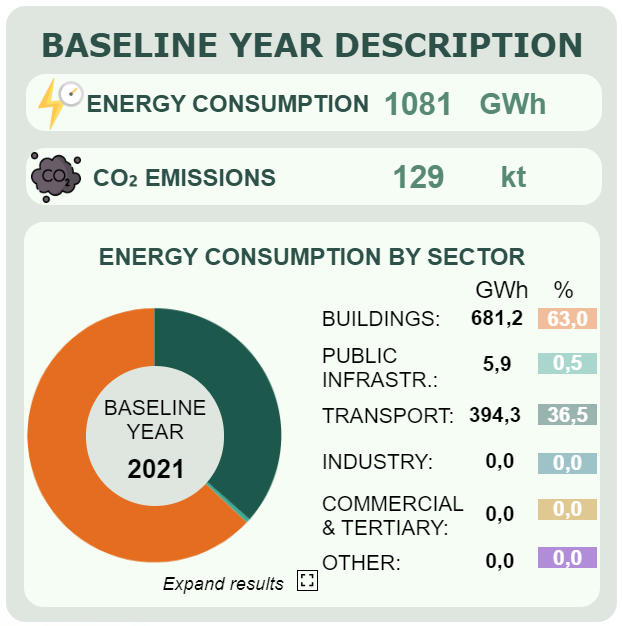
Primary sources of greenhouse gas emissions in Cēsis municipality include:
- Residential and municipal buildings (63 %)
- Transport (36,5 %)
- Public infrastructure (0,5 %)
Total Emissions:
Total CO₂ emissions in the baseline year are estimated at approximately 128 837 tons CO₂eq.
Total Energy Consumption:
Total energy consumption in Cēsis municipality is approximately 1081,3 GWh per year.
4. Measures and Planning
Focus Areas
Cēsis Municipality is committed to sustainability through various initiatives, including becoming Latvia’s first zero waste community and funding local projects that promote circular economies and environmental impact reduction. As part of the Life OwnYourSECAP project, the municipality is enhancing energy efficiency, renewable energy use, and climate action planning, supported by a CO2 modeling tool for emissions analysis and reduction strategies. Additionally, through the Life LatEstAdapt project, a Greening Plan is being developed to strengthen climate adaptation and local green infrastructure. Cēsis is also leading efforts to establish Latvia’s first bioregion, fostering biodiversity, sustainable resource use, and a green economy. To support strategic municipal investments, particularly in historic buildings, the CommitClimate simulation tool is used for data-driven decision-making and scenario modeling.
Modeling results indicate that transport and building sectors hold the highest decarbonization potential in Cēsis. Especially impactful are residential renovations and municipal fleet electrification. Cēsis demonstrates strong leadership in environmental innovation, with active projects under LIFE and CommitClimate, and its pioneering work toward becoming Latvia’s first zero waste community and bioregion.
Key barriers include limited influence over private consumption patterns and legacy infrastructure, but strengths lie in cross-sector collaboration, grassroots initiatives, and clear policy alignment.
Priority indicators include:
- Annual renovation rate of buildings
- Share of renewable energy in buildings
- Share of electric municipal vehicles
- Transport demand and modal split
- Waste generation per capita
The CommitClimate simulator plays a crucial role in aligning Cēsis’ sustainability vision with measurable outcomes, informing investment priorities and supporting robust climate governance.
Key Measures Implemented
Cēsis Municipality is the first public body to join the Zero Waste Initiative, with the goal of becoming Latvia’s first zero waste community. Since 2019, the municipality has been working with local businesses and communities, farms, and others to decrease waste in the region. The municipality has a funding program for local projects aimed at making the city more sustainable, promoting circular economies, and lowering environmental effect.
Cēsis municipality is currently engaged in the implementation of the Life programme project “Bringing Local and Regional municipalities towards owning their Sustainable Energy and Climate Action Plans (SECAPs)” (OwnYourSECAP) – a project in which the municipality of Cēsis County will participate in the adoption of good practices in the use of quality management and certification schemes for better energy efficiency and the use of renewable energy resources, as well as integrated energy and climate planning and management and in the creation of synergies, as well as develop a common Cēsis County Sustainable Energy and Climate Action Plan.
The CO2 modelling tool developed within the framework of this project will be very important in the municipality’s development planning, as it will allow the municipality to calculate CO2 emissions in its territory and then use this simulator to analyse CO2 emission reduction scenarios.
As part of the Life LatEstAdapt project, a Greening Plan will be developed in Cēsis, which will plan local-level green infrastructure and adaptation to climate change.
In collaboration with other towns, entrepreneurs, and various stakeholders, the municipality of Cēsis is presently actively working to establish the first bioregion of Latvia. The experience of bio-regions in other countries (organic districts, bio-districts) has demonstrated how it is possible to improve territories in a relatively short period of time while also contributing to the pursuit of the United Nations’ sustainable development goals, the community’s environmental policies, the impact of climate change, the reduction of CO2 emissions, the preservation of biodiversity, the development of green economy and digital economy. Creating the bioregion would ensure the advancement of issues such as responsible use of energy and natural resources (water, soil, organic substances, and air), respect for natural systems and cycles, and preservation and improvement of soil, water, and air conditions, plant and animal health and their mutual balance, use of local resources and reduction of reliance on non-renewable and external resources, and preservation of natural landscape elements.
The CommitClimate simulation tool plays a crucial role in the strategic planning of future municipal investments, particularly in the assessment of historic buildings, which is a key component of the municipality’s Sustainable Energy and Climate Action Plan (SECAP). This model furnishes the municipality with data-driven insights, enabling informed decision-making and the evaluation and modeling of potential solutions and scenarios through simulation.
Scenario Simulation Results
Municipal Buildings:
- Policy: Integrated package of building envelope upgrades, efficient lighting, appliance optimization, and renewable energy deployment (10 % annual implementation from 2025).
- Results by 2050:
- Annual energy savings: 83 207 MWh (16,7 %)
- Annual CO₂ reduction: 1549 tons (12,7 %)
- Annual renewable generation: +289 MWh
Residential Buildings:
- Policy: Combined renovation (5 – 10 %/year) and electrification strategy from 2025.
- Results by 2050:
- Annual energy savings: 48 975 MWh (26,8 %)
- Annual CO₂ emissions reduction: 1617 tons (18,6 %)
- Annual renewable generation: +577 MWh
Public Infrastructure:
- Policy Measures: LED lighting upgrades, integration of RES, efficiency in wastewater systems (0,5 – 10 %/year).
- Results by 2050:
- Energy savings: 1276 MWh/year (19,3 %)
- CO₂ emissions reduction: 133 tons/year (22,8 %)
- Annual renewable generation: +304,2 MWh
Other Sectors:
- Not included in the simulation model for Cēsis; no policies analyzed.
Transport Sector:
- Municipal Fleet: Electrification, fleet optimization, modernization and eco-driving (0,5 %/year).
- Results by 2050:
- Annual energy savings: 3618 MWh (52,1 %)
- CO₂ reduction: 1473 tons (86,1 %)
- Public Transport: Operational efficiency and route optimization (2 %/year).
- Results by 2050:
- Annual savings: 4159 MWh (46,7 %)
- CO₂ reduction: 1106 tons (46,7 %)
- Private Transport: Car sharing and freight demand reduction (0,5 %/year).
- Results by 2050:
- Annual energy savings: 60 413 MWh (14,3 %)
- Annual CO₂ reduction: 13 303 tons (13,9 %)
Waste Management:
- Policy: Per capita waste generation reduction (0,5 %/year).
- Results by 2050:
- Waste generation reduction: 1183 tons (11,8 %)
- GHG reduction: 406 tons (2 %)
Local energy production:
- Not included in the simulation model for Cēsis; no policies analyzed.
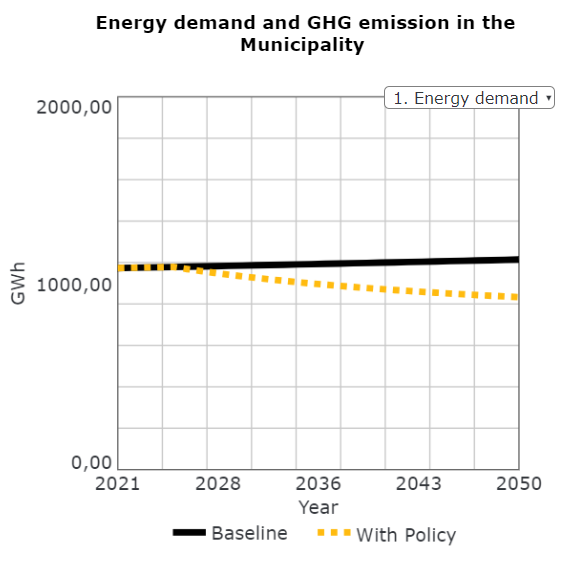
The results of the simulation show that in the baseline scenario energy demand in the municipality increases by approximately 0,15 %/year over time due to population increase and economic and activity growth assumptions. As illustrated in the figure below, total energy demand rises over time, reaching 1127,02 GWh in the baseline scenario by 2050. The implementation of the selected policy package causes a gradual energy demand decrease, resulting in an energy demand of 925,37 GWh by 2050. This corresponds to energy savings of 201 648,6 MWh, or 17,9 % compared to the baseline projection.
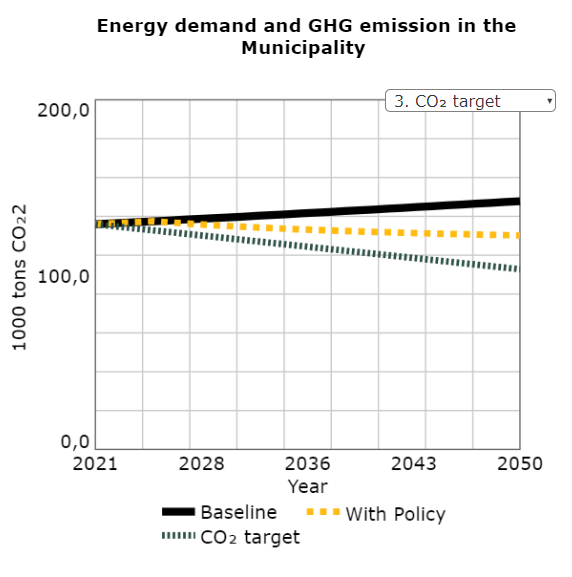
The selected policy package leads to moderate emission reductions – CO₂ emissions decrease from 142 thousand tons in the baseline scenario to approximately 122,4 thousand tons in the policy scenario by 2050, resulting in annual emission savings of 19 552,4 tons (13,8 %). As shown in the figure below, while the policy scenario lowers emissions compared to the baseline trajectory, emissions remain above the long-term CO₂ target, indicating that additional mitigation measures would be required to fully achieve the municipality’s climate objectives.
5. First steps implemented
Pre-Feasibility study description
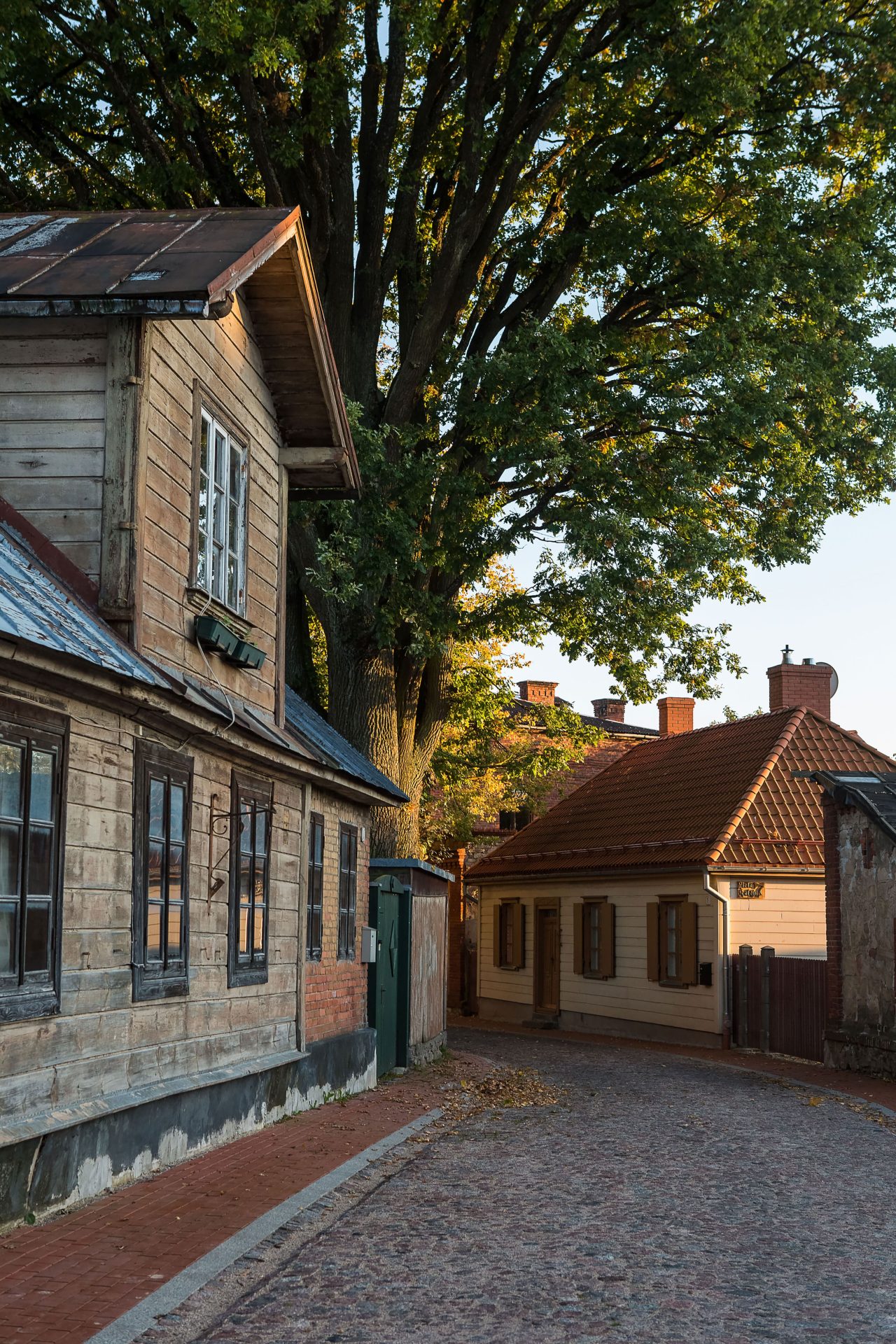
Considering that one of the priority areas of the Sustainable Energy and Climate Action Plan (SECAP) for the Cēsis municipality is the enhancement of energy efficiency in historical buildings, and given that the municipality owns a significant number of such buildings, the pre-feasibility study is specifically focused on this sector. The objective is to gather data and develop potential scenarios for improving the condition of historical buildings, including optimizing heating systems, reducing heat loss, and minimizing CO2 emissions.
A notable example is the cultural monument located on Bērzaines Street. Due to its size, structure, and other factors, planning energy efficiency measures that are proportionate to the investments and benefits is particularly challenging. This pre-feasibility study and its outcomes will serve as a foundation for future efforts with other historical buildings.
6. Stakeholder Engagement
The municipality consistently informs the public about ongoing projects, thereby raising awareness and drawing attention to climate change adaptation and CO2 reduction, which are integral to various municipal activities and projects. However, due to a lack of knowledge and data on energy consumption reduction measures and their economic impacts, the municipality anticipates that the CommitClimate model will become a crucial tool in the future. This model will aid in informing and educating the public about actions and their effects on emission reductions.
In the upcoming year, the municipality of Cēsis plans to enhance public involvement in the project, fostering more active and closer collaboration with local residents in utilizing the model and educating the community.