
For citizens
Household CO₂ Simulator
The CommitClimate Household CO₂ Simulator is an interactive tool created to help you assess and reduce your carbon footprint. With just a few inputs, you can see how your daily choices — such as energy use, transportation, and diet — affect your overall carbon footprint. After completing the calculator you can test different strategies for cutting emissions, to see what you can do to make your lifestyle more sustainable.
Ready to take action for the climate? Try the simulator today and start reducing your impact!
Ready to take action for the climate? Try the simulator today and start reducing your impact!


Frequently asked questions about carbon footprint and the CommitClimate Carbon Footprint Calculator
What are CO₂ emissions and why is it a problem?
CO₂ (carbon dioxide) emissions are gases released into the atmosphere primarily from burning fossil fuels like coal, oil, and gas. These emissions contribute to global warming and climate change. CO₂ traps heat in the Earth’s atmosphere, leading to rising global temperatures, extreme weather, and environmental disruptions. Reducing emissions helps slow climate change.
How do I contribute to CO₂ emissions?
In a typical household CO₂ emissions come from everyday activities like:
- Energy use – Heating, cooling, and using electricity at home, especially if powered by fossil fuels.
- Transportation – Driving a car, flying, or using other fuel-based transport.
- Food choices – Eating high-carbon foods like meat and dairy, or wasting food.
- Shopping habits – Buying new clothes, electronics, and other goods that require energy to produce and transport.
- Waste generation – Throwing away items instead of recycling or repairing them.
What are some simple ways to reduce my CO₂ emissions?
- Use public transport, cycle, or walk instead of driving.
- Switch to renewable energy sources where possible.
- Eat more local and plant-based foods and reduce food waste.
- Buy second-hand or repair items instead of purchasing new ones.
- Reduce, reuse, and recycle to minimize waste.
What is the CommitClimate Household CO₂ Simulator?
The simulator is a free online tool that helps household residents estimate their carbon footprint and explore ways to reduce it. It was developed by the CommitClimate project team co-funded by the EU Interreg Baltic Sea Region program.
How does the simulator calculate my carbon footprint?
The simulator uses input data such as energy consumption, transportation habits, and diet choices and multiplies it with their respective emission factors to estimate CO₂ emissions. After calculating your footprint, the tool lets you test different actions to lower your carbon impact.
How accurate are the calculations?
While the tool provides a close estimate, actual carbon footprints may vary based on specific factors not included in the model. Nevertheless, the results are accurate enough to be used as a starting point regarding the implementation of emissions reduction measures.
Can I save my results?
Yes, your results can be exported as a .csv file using the “Export” button at the end of the simulator. It can be opened in Microsoft Excel by following these steps:
- Open Excel and go to File > Open > Browse.
- Select **”Text Files (*.prn; .txt; .csv)” and choose your .csv file.
- If prompted, use the Import Wizard (choose Delimited, select Comma, then Finish).
- Save as Excel Workbook (.xlsx) if needed.
Do I need to install any software to use the simulator?
No, the simulator runs online and does not require any installation. You can use the simulator on any desktop, laptop, tablet or smartphone with an internet connection.
Who can I contact for support or feedback?
For support or questions, you can reach out to the CommitClimate project team via the Contact page on this website.
Citizen workshops
Article archive
As part of our project, we have hosted seminars across all participating municipalities to actively involve citizen in discussions about local climate and energy transition goals. These events provided a platform to address key challenges, share insights, and hear directly from the community. In this section, you can explore our citizen engagement initiatives and the valuable lessons learned in each municipality.
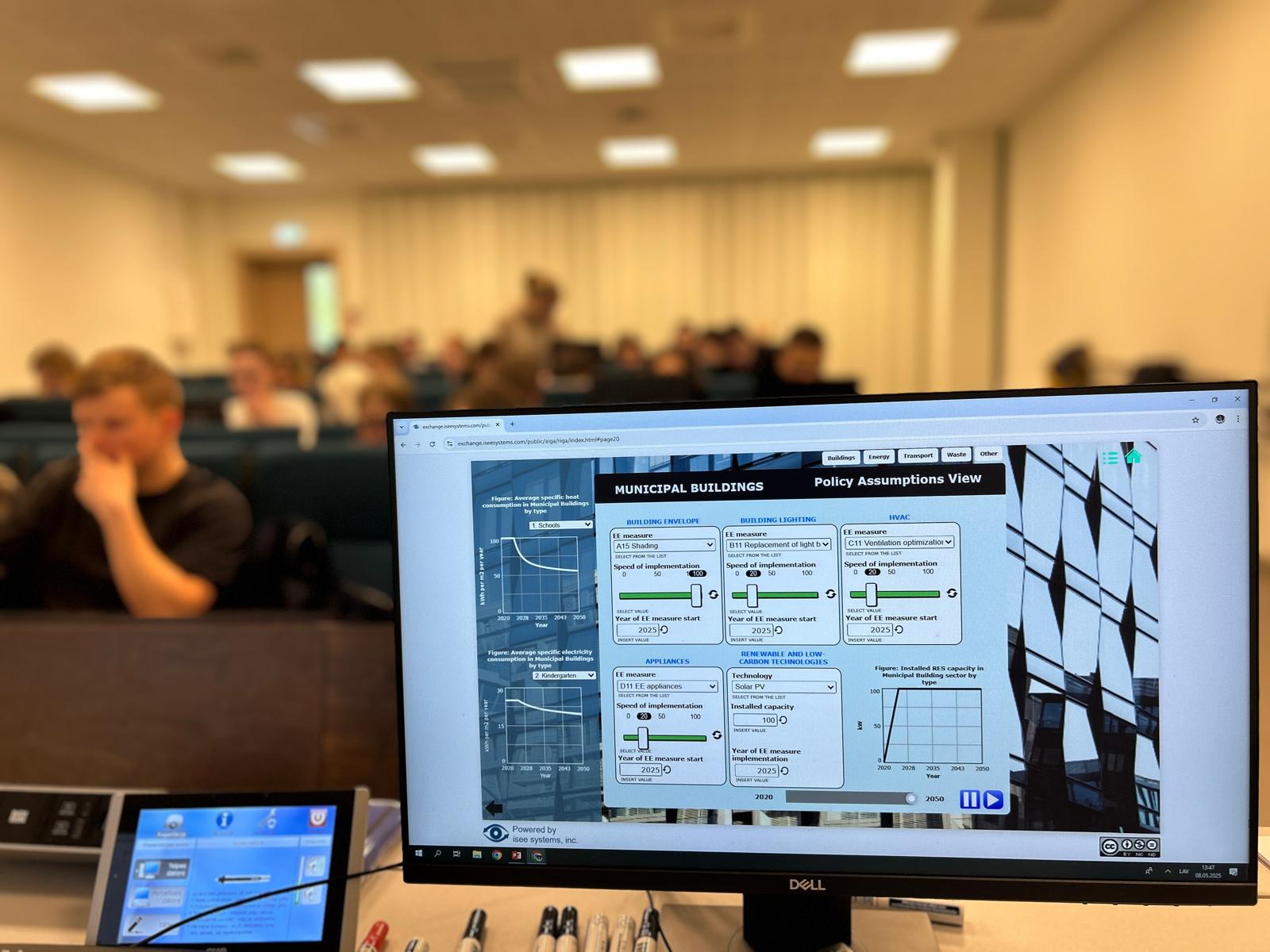

CommitClimate citizen survey
As the first year of the CommitClimate project came to a close, we conducted a resident survey across participating municipalities in late 2021. More than 1,100 respondents shared their insights and experiences. We invite you to explore the survey results!
Goal of the survey
The survey aimed to understand how residents in different Baltic Sea Region municipalities perceive their municipality’s efforts to promote sustainable living. It explored people’s daily habits in transport, energy use, and waste management, as well as their personal views on climate change, in order to identify priority areas for local climate action and policy support.

Respondent characteristics
A total of 1151 people from Sweden, Estonia, Latvia, and Poland took part in the survey. Respondents varied by age, place of residence, and housing conditions, which provided a diverse picture of attitudes toward climate issues.

Transport
Most participants travel daily by private car, while public transport received the most critical evaluations. The most supported measures included improving public transport, developing cycling infrastructure, and creating pedestrian-friendly urban spaces.

Energy
The majority of residents strive to save energy and water by using energy-efficient lighting and household appliances. The most supported measures were upgrading street lighting, introducing smart lighting systems, and promoting energy-efficient solutions for businesses and homeowners.
Waste management
Respondents most often sort waste and use packaging deposit systems. The most widely supported measures were expanding recycling and composting services, providing local incentives for organic waste collection, and educating residents about responsible waste management.
Personal views and beliefs
Most participants are aware of global environmental issues and feel personally responsible for reducing their impact. While many note external barriers to changing habits, they believe that the transition to climate neutrality will benefit their communities.

Useful resources
Explore practical guides and tips to help you implement the CO₂ reduction measures suggested by the CommitClimate Household CO₂ Simulator. Whether it's improving home energy efficiency, adopting sustainable transportation, or making eco-friendly lifestyle choices, these resources provide actionable steps to lower your carbon footprint. Start making a difference today!
Informative tools and platforms
⚡ RENEWABLE ENERGY
EU-wide tools
- PVGIS → Estimates how much electricity your solar panels would generate. Users can check solar potential for their exact location and expected savings and production. https://re.jrc.ec.europa.eu/pvg_tools/en/
- EPREL database →
Database of energy-labelled appliances. Helps to choose energy-efficient fridges, washing machines, etc. https://eprel.ec.europa.eu
♻️ WASTE SORTING&REPAIR (reuse, circular economy)
Estonia
- https://www.kuhuviia.ee/ → Where to bring different types of waste (incl. hazardous, e-waste)
- https://paranda.ee/en/ → Repair workshops / repair cafés (fix instead of buying new)
Latvia
- https://www.lietovelreiz.lv/lv/par-mums → Map of repair, rental, donation, and reuse services
- https://www.zalais.lv/skirot/kur-skirot → Map of waste sorting and recycling points
- https://biologiski.lv/ekoveikali-un-zemnieku-tirdzini → Map of eco stores and farmers’ markets
Sweden
- https://www.sopor.nu/en/ → Waste sorting guide + MAP
Poland
- https://elektrosmieci.pl/ → E-waste collection points map
- https://www.uwagasmieciarkajedzie.org/ → Waste sorting + collection schedules (app)
Available support
Estonia
⚡ Renewable energy (households)
- Support provider: KredEx
https://www.kredex.ee/en - Type: Grants
- Addresses:
- Solar panel installation
- Building renovation and insulation
- Support level: Typically ~30–40% of eligible costs
- Purpose: Reduce energy bills and enable households to produce renewable energy
🚗 Green transport
- Type: Direct subsidy
- Addresses: Electric vehicle (EV) purchase
- Support level: Up to €5,000 per vehicle
- Purpose: Reduce upfront cost of switching to zero-emission vehicles
Latvia
⚡ Renewable energy (households)
- Information & programmes: Ministry of Economics
👉 https://www.em.gov.lv - Type: EU-funded grant programmes (calls)
- Addresses:
- Solar panels
- Heat pumps
- Building renovation
- Support level: Typically ~30–50% (depends on programme)
-
⚠️Available only during specific programme calls (e.g. ALTUM, Recovery Fund)
- Purpose: Support transition to renewable energy and improve efficiency
🚗 Green transport
- Type: Direct subsidy (planned programme)
- Status: ⚠️ Not yet fully approved / launching soon
- Planned support levels:
- €4,000 → new electric or plug-in hybrid car
- €3,000 → used electric car
- + €2,000 bonus → if scrapping an old fossil-fuel car
- €5,000–€9,000 → for large families
- Total budget: €40 million
- Duration: until 2029 or until funds are used
- Purpose: Reduces upfront cost of switching to low-emission vehicles and accelerates EV adoption
Sweden
⚡ Renewable energy (households)
- Tax deduction (ROT scheme):
https://www.skatteverket.se - Energy advice:
https://www.energiradgivningen.se - Type: Tax deduction + advisory support
- Addresses:
- Solar panels
- Renovation and efficiency improvements
- Support level: Up to ~30% of labour costs
- Purpose: Encourage gradual energy upgrades in homes
🚗 Green transport
- Type: Tax incentives + targeted support
- Addresses: Low-emission vehicles
- Support level:
- Low annual tax for EVs (~SEK 360/year)
- Scrappage bonus (~SEK 10,000) for replacing old cars
- Purpose: Encourage cleaner vehicles through long-term cost savings
Poland
⚡ Renewable energy (households)
- Mój Prąd (My Electricity):
https://mojprad.gov.pl - Czyste Powietrze (Clean Air):
https://czystepowietrze.gov.pl - Type: Grants
- Addresses:
- Solar panels
- Energy storage
- Heating system replacement and insulation
- Support level:
- ~€1,000–€5,000+ for solar systems
- Higher support for combined systems
- Purpose: Reduce emissions from household energy use
🚗 Green transport
- Type: Direct subsidy programme (“NaszEauto”)
- Addresses: Electric vehicle purchase
https://www.gov.pl/web/klimat - Support level:
- Base: ~PLN 18,750 (~€4,000)
- Up to PLN 40,000 (~€9,000) with bonuses
- Purpose: Accelerate EV adoption and reduce transport emissions
Note!
Support schemes are updated regularly and may depend on funding availability, so always check official websites for current conditions and deadlines.