
1. Municipality Profile
Key Economic Sectors
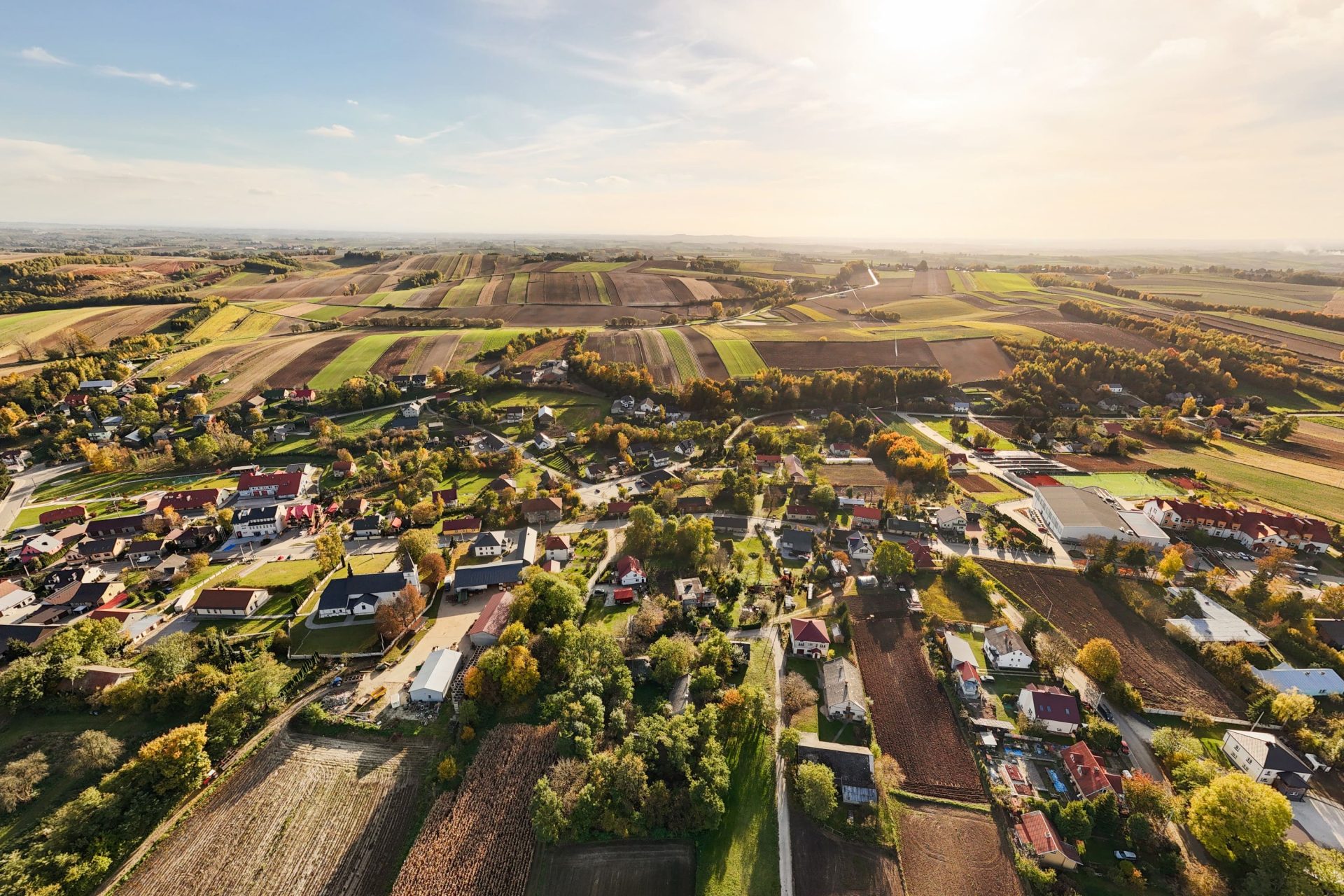
Pałecznica municipality is agricultural commune, characterized by very good soils and clean air. The natural wealth of the commune is unpolluted brown, black and alluvial soils. They have been classified in the highest quality class due to their productive nature. They cover around 80% of the municipality area.
Governance Structure
The concept is grounded in the principle of decentralization, giving local authorities autonomy to manage certain public affairs, finance, and policies without direct intervention from the central government.
Gmina (municipality) is the smallest administrative unit, responsible for local services such as education, public safety, and infrastructure. It can consist of urban areas (cities) or rural areas (villages). There are over 2,400 municipalities in Poland.
Local government representatives are directly elected by citizens in general elections. These include:
- Mayor: The head of a municipality, responsible for overseeing and running the commune.
- Councilors: Elected to represent the citizens at the municipality. Their role includes adopting budgets, approving policies, and making decisions about local development.
2. Motivation for Climate Neutrality
Reasons for Action
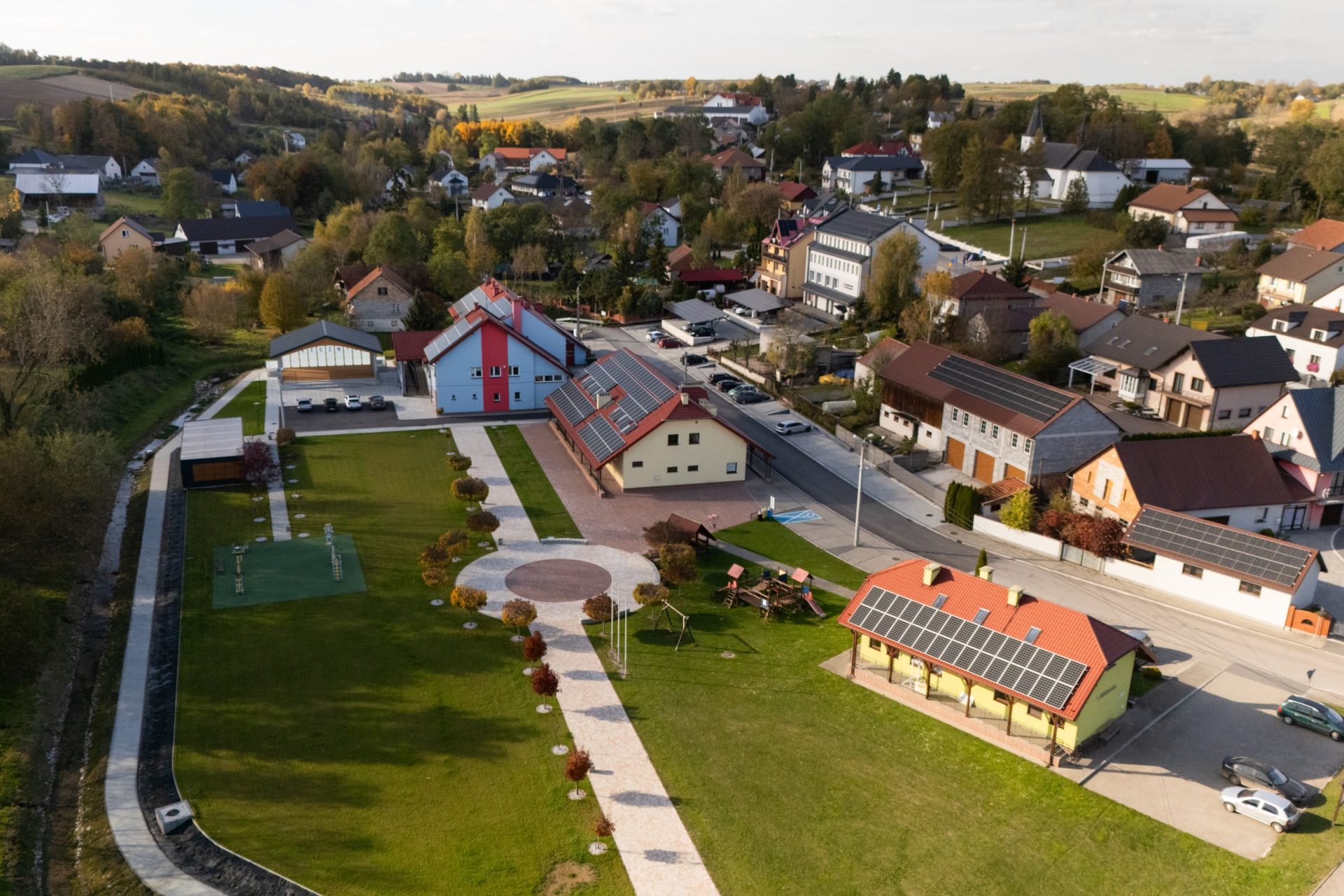
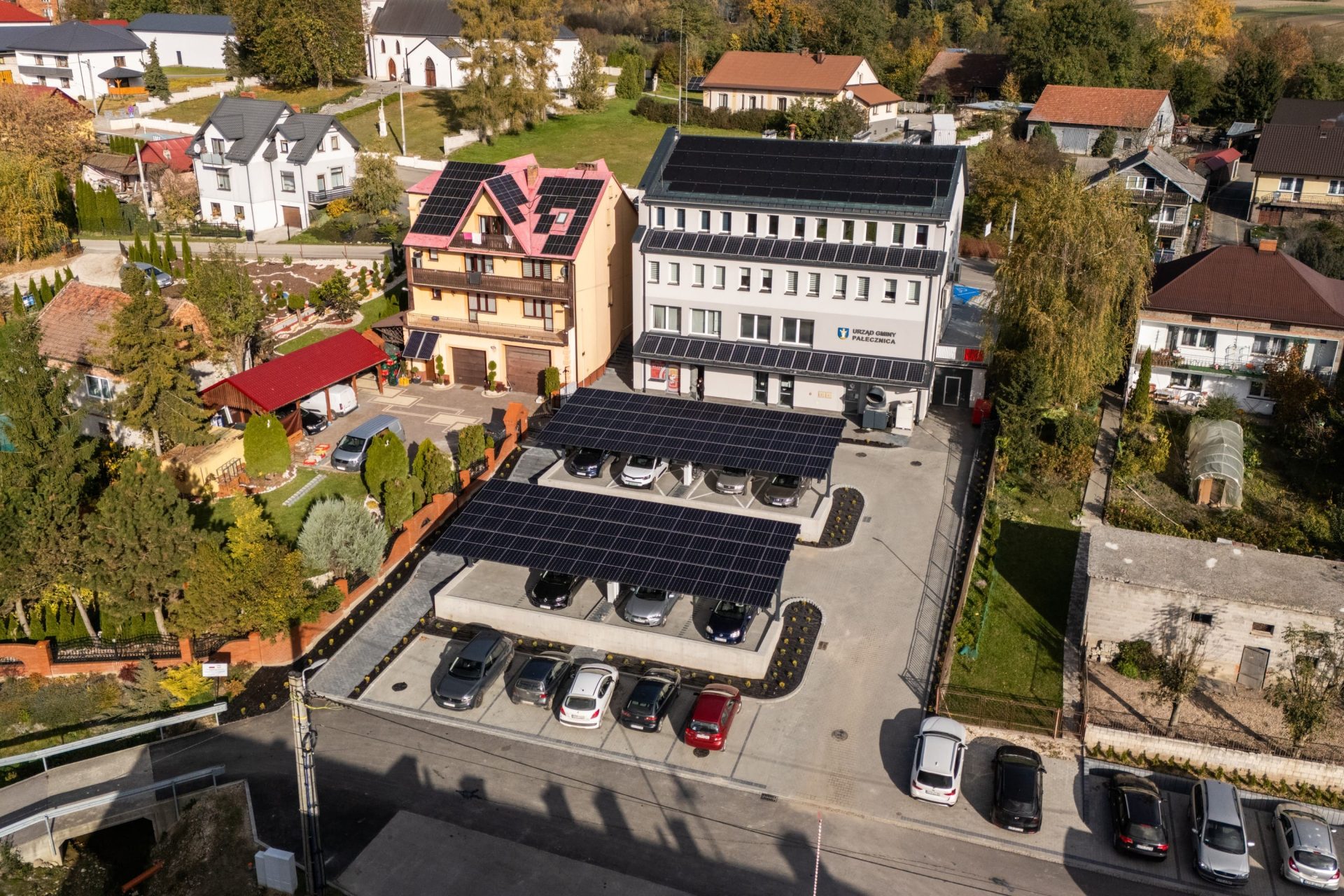
Pałecznica is very active in fields of energy efficiency, renewable energy and water treatment. Among finalized project there can be found PV installations for public and private buildings, buildings thermal modernization, heat pumps, water treatment and ICT implementations. It all began in 2013, when first heat pumps for public buildings were installed. They were supported with PV installations in 2015 and this was a trigger for further development. It showed that change from fossil fuels can give economic, ecologic and health benefits. Since then almost all public buildings has been equipped in PV installations and replaced heating systems. Moreover some projects with financial support for private households in renewable energy sources were implemented.
Strategic Goals
The strategic goal for public buildings and infrastructure (including transport) is to become energy-independent from external suppliers. This requires further development of renewable energy sources like PV and more stable sources (e.g., biomass).
3. Baseline Assessment
Data Collection Process
Municipality has several sources of data required for CO2 inventory:
- Baseline inventory for local low-carbon economy plan – data gathered for year 2014,
- CommitClimate survey,
- Data gathered by an Intelligent Energy Management Centre – local system for energy management and data collection working since 2022,
- Data from Statistics Poland – national database,
- Data from County Communication Office – with data about type and number of vehicles registered in the municipality
- Data from the General Directorate for National Roads and Motorways – with data about traffic intensity.
- Building Emissions Central Register (started in July 2021).
Most difficult data to collect is data from transport in private sector – this data is an expert estimates based on surveys and data from national documents. Secondly data about local energy production by private installations – only from owners (surveys).
CO2 Emission Inventory
Sources of Emissions:
The primary sources of greenhouse gas emissions in Pałecznica Municipality, based on the 2021 CommitClimate baseline inventory, include:
- Residential and municipal buildings (78.6%)
- Transport (11.3%)
- Waste management (8.4%)
- Public infrastructure (1.8%)
Total Emissions:
Total greenhouse gas emissions in the baseline year (2021) are estimated at approximately 23,200 tonnes CO₂eq.
Total Energy Consumption:
Total annual energy consumption in Pałecznica Municipality in the baseline year is approximately 48.84 GWh.
Other Environmental Data
The municipality also monitors energy consumption across the main sectors, including buildings, transport and public infrastructure. Data on electricity consumption for public lighting, clean water preparation and wastewater treatment are included in the Public Infrastructure sector.
Waste generation, composition and treatment methods are assessed separately in the Waste Management sector. Renewable electricity generation is represented through sector-specific inputs, while electricity and district heating supply requirements are assessed within the Local Energy Production module.
Air quality and biodiversity indicators are not explicitly represented in the current CommitClimate simulation inventory.
4. Measures and Planning
Focus Areas
The modelling results indicate that residential buildings represent the largest source of energy consumption and greenhouse gas emissions in Pałecznica Municipality. Accordingly, residential building renovation offers the greatest energy-saving and emission-reduction potential among the tested measures.
Municipal building energy efficiency improvements and small-scale renewable electricity generation provide additional opportunities to reduce energy demand and support local energy self-sufficiency. However, the tested measures in municipal buildings produce relatively modest savings, indicating that deeper renovation and heating-system modernisation could provide additional benefits.
Waste management is another relevant area for potential greenhouse gas emission reductions, particularly through reducing waste generation and increasing recycling rates.
Transport accounts for a smaller but still significant share of the municipality’s emissions. Although electrification of municipal passenger cars was tested, its simulated impact is limited due to the relatively small scale of the intervention. Additional measures targeting private and public transport could contribute to more substantial reductions.
Key strengths include:
- Active development of RES since 2015
- Strong foundation for public building upgrades
- Community waste engagement infrastructure
Barriers include:
- Limited municipal influence over energy consumption in private buildings and private transport.
- Financing constraints for comprehensive building renovation and energy system modernisation.
- Limited availability of detailed private-sector energy and transport data.
- The need for further development of local energy production and storage solutions.
Conclusion: Palecznica’s most effective decarbonization strategy focuses on building renovation (especially in residential buildings), waste management optimization, and the continued electrification of municipal transport. Supported by the CommitClimate project tools and European best practices, the municipality is well-positioned to take informed, data-driven steps toward climate neutrality.
Key Measures Implemented
Transport: purchase of electric vehicles (municipal fleet, school coaches).
Public lightning: Dec 24 an agreement for replacement of all public (sodium) lamps into LED was signed. Measures will take place in 2025-2026.
Waste management: municipal waste selective collection point for citizens was opened in 2021 – inhabitants can deposit recyclable waste, old but functional goods (for second hand users), repair items. Another such point is foreseen – project is ready, actually searching for financing.
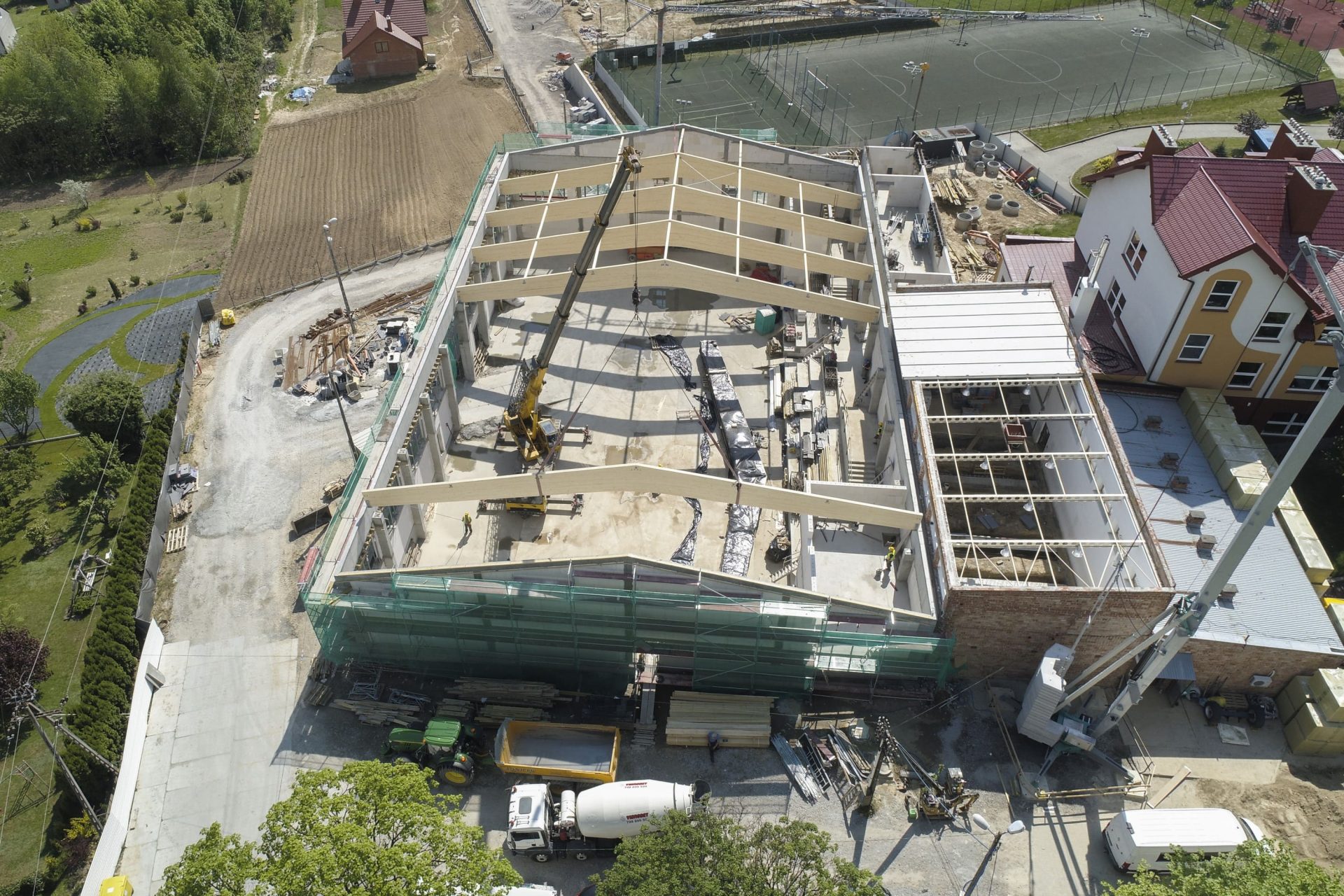
Buildings: step-by-step renovation of public buildings, with emphasis on zero-energy requirements. Dec 24 – proposal for thermal modernizations of schools and kindergarten was submitted (estimated costs of work around 2 mln €).
RES: PV installations development since 2015 (849 kWp in total), 11 major buildings using heat pumps (11 – 161 kW), biogas/biomass or wind energy in plans
CommitClimate: 1. gives a broader perspective on energy management thanks to exchange of experience with European partners. 2. support with tools for simulations of most important measures.
Scenario Simulation Results
The simulations were conducted for exploratory and analytical purposes. They do not represent official projections and have not been formally adopted or endorsed by Pałecznica Municipality.
Municipal Buildings:
- Policy: Replacement of inefficient light bulbs (one-time implementation), ventilation optimisation (5% annual implementation rate, 10% expected savings) and additional solar photovoltaic capacity, starting in 2025.
- Results by 2050:
- Annual energy savings: 90 MWh (2.8%)
- Annual CO₂ reduction: approximately 21 tonnes (1.3%)
- Additional annual renewable electricity generation: 0.129 MWh, as reported in the simulation
- Total annual PV generation: approximately 854 MWh
Residential Buildings:
- Policy: Renovation of single-family houses (3% annual implementation rate, 10% expected savings), starting in 2025.
- Results by 2050:
- Annual energy savings: 1,524 MWh (4.4%)
- Annual CO₂ emissions reduction: 729 tonnes (4.3%)
Public Infrastructure:
- No additional public infrastructure policy measures were tested in the current simulation. Consequently, no policy-driven energy savings or emission reductions were calculated for this sector.
Other Sectors:
- Energy consumption and greenhouse gas emissions from commercial and tertiary activities, industry and construction, agriculture and forestry, and other economic activities were not included in the baseline inventory and projections. Consequently, no policy measures were analysed for these sectors.
Transport Sector:
- Municipal Fleet: Electrification of municipal passenger cars, with electric vehicles representing the target technology (100%), implemented from 2025 to 2050.
- Results by 2050:
- Annual energy savings: 5 MWh (1.4%)
- Annual CO₂ reduction: 1 tonne (0.7%)
- Public Transport: No additional policy measures were tested. The baseline scenario projects a gradual decrease in energy consumption due to the assumed population decline, but no additional policy-driven savings were calculated.
- Private Transport: No specific policy interventions were tested. Energy consumption and emissions follow the baseline trajectory, which reflects the assumed gradual decrease in population. No additional policy-driven savings were calculated.
Waste Management:
- Policy: Reduction of per capita waste generation (0.5% annual implementation rate) and reduction of landfilling, with the disposal share decreasing from 52% to 38% and the recycling share increasing from 16% to 30%.
- Results by 2050, as reported in the simulation:
- Waste generation reduction: 292 tonnes (reported as 11.8%)
- GHG emissions reduction: 464 tonnes CO₂eq (reported as 12.4%)
Local Energy Production:
- No additional policies specifically targeting local electricity or district heating production were tested in the Pałecznica simulation.
- The Local Energy Production module represents electricity and district heating supply requirements, including distribution losses. Its results reflect changes in final energy demand and renewable electricity generation arising from policies implemented in other sectors.
- Since no additional local energy production policies were activated, no independent energy savings or emission reductions are attributed to this sector.
Overall Simulation Results
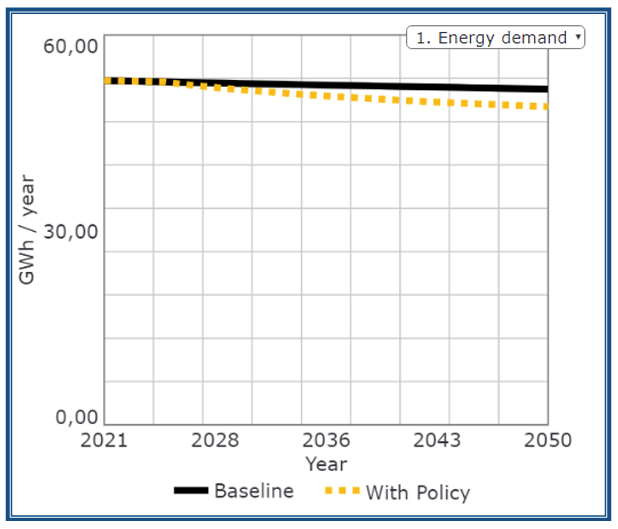
The simulation results show that annual energy demand in Pałecznica Municipality decreases from approximately 48.84 GWh in the 2021 baseline year to 47.92 GWh by 2050 under the baseline scenario.
The decrease is primarily driven by the assumed gradual population decline of approximately 0.48% per year, partly offset by the projected construction of additional municipal and residential buildings.
The implementation of the selected policy package leads to a further reduction in energy demand, reaching approximately 46.30 GWh/year by 2050.
This corresponds to annual energy savings of approximately 1,619 MWh, or 3.4%, compared with the 2050 baseline projection.
The largest contribution to energy savings comes from residential building renovation, which reduces annual energy demand by approximately 1,524 MWh. Municipal building efficiency improvements and municipal passenger car electrification provide additional, smaller contributions.
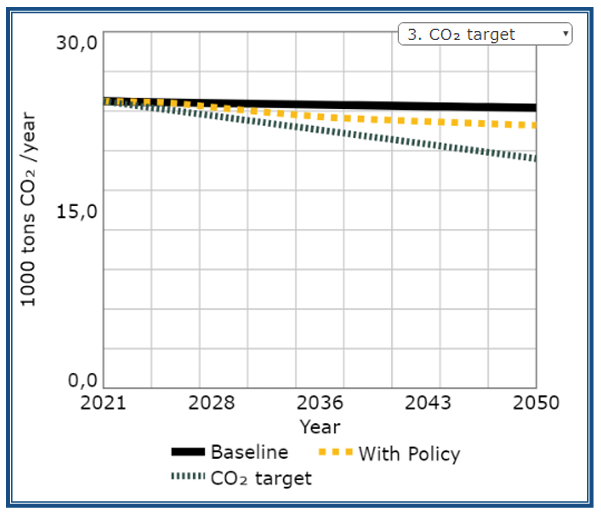
The selected policy package also leads to a reduction in greenhouse gas emissions. Annual emissions decrease from approximately 23,200 tonnes CO₂eq in 2021 to 22,900 tonnes CO₂eq in the 2050 baseline scenario.
With the selected policies, annual emissions decrease further to approximately 21,900 tonnes CO₂eq by 2050.
This corresponds to annual greenhouse gas emission savings of approximately 960 tonnes CO₂eq, or 4.2%, compared with the 2050 baseline projection.
Residential building renovation provides the largest individual contribution to emission reductions among the building and transport measures, while waste management policies also offer additional emission reduction potential.
Despite these improvements, the policy scenario remains above the illustrative 20% emission-reduction target used in the simulation. More ambitious policies would therefore be required, particularly in residential and municipal buildings, transport and the decarbonisation of electricity and heat supply.
The results support the identification of potential investment priorities and provide additional analytical evidence for Pałecznica Municipality’s Development Strategy 2030, ongoing Municipal Energy Transition Strategy and possible future SECAP-related planning activities.
5. First steps implemented
Pre-Feasibility study description
In the case of Pałecznica, it was noticed that school buildings are the ones that require the most attention in terms of energy efficiency. Thermal insulation of school buildings is usually performed by all municipalities, as the most effective method of decreasing heat losses. In our case, we decided to check what happens when a natural (gravity) ventilation system is replaced by mechanical ventilation. Estimated heat losses due to ventilation are around 30-55%, so there is a huge saving potential. Additionally, mechanical ventilation can provide air quality and temperature measurements, which can be used to improve users’ comfort. In this case school building was built in 2011, so some construction work will be necessary to foreseen.
All schools built in the Baltic Sea Region in the period 1960-2010 have the same problem with gravity ventilation: in winter time causes buildings to cool down. During the construction time investors use less expensive solution – gravity ventilation. At the time of building use, it turns out that this solution has major defect: energy loses and no control options. Feasibility study will help to check the possibility of implementing mechanical ventilation in an existing building. Such investment may become a good practice for other municipalities/schools.