1. Municipality Profile – Jokkmokk
Key Economic Sectors
The local economy of Jokkmokk is characterized by a diverse range of activities spanning. The public sector is an important employer. The primary sector collectively provide employment for about 500 individuals. Both Real Estate, Insurance, and Financial Services and Industrial, Energy, and Construction Sectors are key as well as tourism.
Governance Structure
Sweden has three levels of domestic government: national, regional and local level. Jokkmokk is one of 290 municipalities, with own self-governing local authority. Municipalities are legally obliged to provide certain basic services. Jokkmokk is responsible for a broad range of facilities and services including housing, roads, water supply and wastewater processing, schools, public welfare, elderly care, childcare and emergency preparedness. The municipalities are entitled to levy income taxes on individuals, and they also charge for various services. At the regional level, Sweden is divided into 21 regions. Jokkmokk lies in Norrbotten region. The regions are responsible for overseeing tasks such as healthcare and dental care. They are also entitled to levy income taxes to cover their costs. Municipalities have a central role in the development of energy infrastructure. The municipal planning monopoly is a fundamental subset of municipal responsibilities. The municipalities also have an important role in dialogue, the exercise of authority and the strategic development of the local community.
2. Motivation for Climate Neutrality
Reasons for Action
In 2017 Sweden adopted a new climate policy framework. The framework consists of a climate act, climate targets and a climate policy council. Sweden’s long-term target is to achieve zero net greenhouse gas emissions by 2045 at the latest.
Strategic Goals
Long term target
The long-term target for Sweden is zero net greenhouse gas emissions by 2045 and anfer that to achieve negative net emissions. Achieving zero net emissions of greenhouse gases means that the emissions of greenhouse gases from activities in Sweden shall be at least 85 per cent lower in 2045 compared to 1990. The remaining reductions down to zero can be achieved through supplementary measures.
Milestone targets
The milestone targets towards the long-term goal include emissions covered by the EU’s Effort Sharing Regulation (ESR). Emissions covered by the EU Emissions Trading System (EU ETS) are not included. The milestone targets are:
- By 2030 emissions are to be 63 per cent lower than 1990
- By 2040 emissions are to be 75 per cent lower than 1990
International targets and obligations
Sweden as a member state of the European Union is a Party of the Paris Agreement and is obliged to reach binding EU-climate and energy targets.
3. Baseline Assessment
Data Collection Process
Lapplands Kommunalförbund has collected publicly available data to apply the CommitClimate Simulator on the case Jokkmokk mainly from
- Swedish Statistics
- Swedish National Board of Housing, Building and Planning
- Transport Analysis
- Swedish Energy Companies Statistics on District Heating
- Swedish Tax Authority
Further data have been collected through a dialogue with relevant municipal departments and stakeholders in Jokkmokk with support of the Local Working Group and the CommitClimate Survey, mainly to complement data for behaviour-related data of citizens / households.
CO2 Emission Inventory
Sources of Emissions:
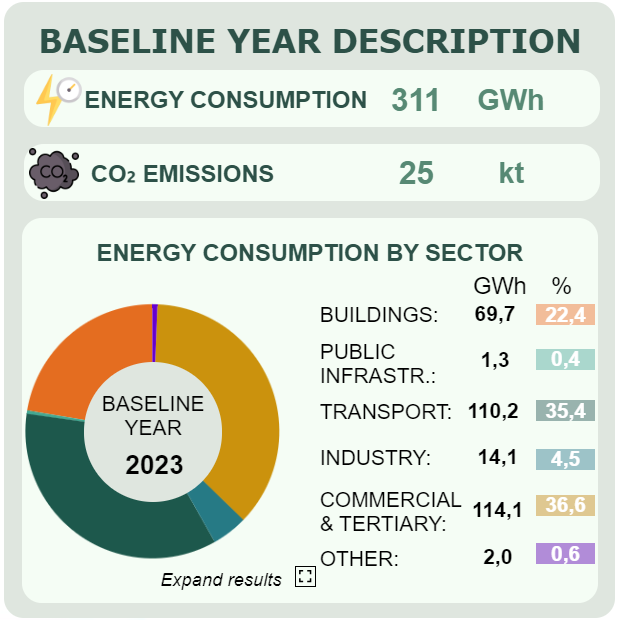
Primary sources of greenhouse gas emissions in Jokkmokk municipality include:
- Commercial & Tertiary sector (36,6 %)
- Transport (35,4 %)
- Residential and municipal buildings (22,4 %)
- Industry & Construction (4,5 %)
Total Emissions:
Total CO₂ emissions in the baseline year are estimated at approximately 24 575 tons CO₂eq.
Total Energy Consumption:
Total energy consumption in Cēsis municipality is approximately 311,46 GWh per year.
4. Measures and Planning
Focus Areas
These simulations were conducted by Lapplands Kommunalförbund solely for exploratory and analytical purposes. They do not represent official projections, nor have they been adopted or endorsed by Jokkmokk municipality. Rather, these exercises serve as a basis for discussion and reflection among municipal stakeholders and may support future decision-making processes.
The modeling results suggest that Jokkmokk’s most impactful emission reduction potential lies in the residential and private transport sectors, supported by proactive municipal action in public buildings and infrastructure. The municipality’s relatively high reliance on electricity makes it well-positioned to benefit from Sweden’s green energy mix.
Vision of Modeling Results:
Our vision for modeling results is to provide actionable insights into the potential for energy efficiency, renewable energy, and sustainable transport in the private housing sector and in private transport. By using the CommitClimate simulator, we aim to identify where the largest opportunities for energy efficiency and small scale renewable energy production lies. By this, we will contribute to a more locally tailored advisory service for meeting energy and climate targets.
Opportunities to Implement Measures:
The modeling results will be used to assess potential for action in:
1. Increasing energy efficiency in buildings among households and businesses.
2. Expanding renewable energy generation, tailored to local conditions.
3. Promoting sustainable transport solutions, like electrification of vehicles, cyckling and walking
These opportunities not only reduce emissions but also support local economic growth and improve community well-being.
Barriers:
Despite the potential, several barriers exist, including:
– Limited financial resources or incentives for households and businesses to adopt measures.
– Lack of awareness or technical knowledge about sustainable solutions.
– Challenges in integrating renewable energy into existing systems due to grid limitations or regulatory hurdles.
– Resistance to change due to perceived complexity or cost.
Strengths:
Jokkmokk and our other member municipalities possess key strengths to overcome these barriers, such as:
– A growing awareness of the need to act on energy transition.
– The availability of a free and independent energy and climate advisory service to provide tailored support.
– Access to tools like the CommitClimate simulator, which provides clear, data-driven insights.
Priority Sectors:
Based on the modeling potential, the priority sectors include:
1. Buildings: Enhancing energy efficiency and transitioning to renewable systems like solar.
2. Transport:Promoting electrification as well as cycling/walking for short distances
3. Local Energy Production: Expanding small-scale renewable energy projects to increase self-sufficiency.
Key Performance Indicators (KPIs):
To track progress and ensure impact, we propose the following KPIs:
– Percentage reduction in energy consumption in residential and commercial buildings.
– Increase in the share of renewable energy in total energy consumption.
– Reduction in greenhouse gas emissions from transport.
– Number of households and businesses supported by advisory services and implementing measures.
– Local job creation in renewable energy and sustainable transport sectors.
Key Measures Implemented
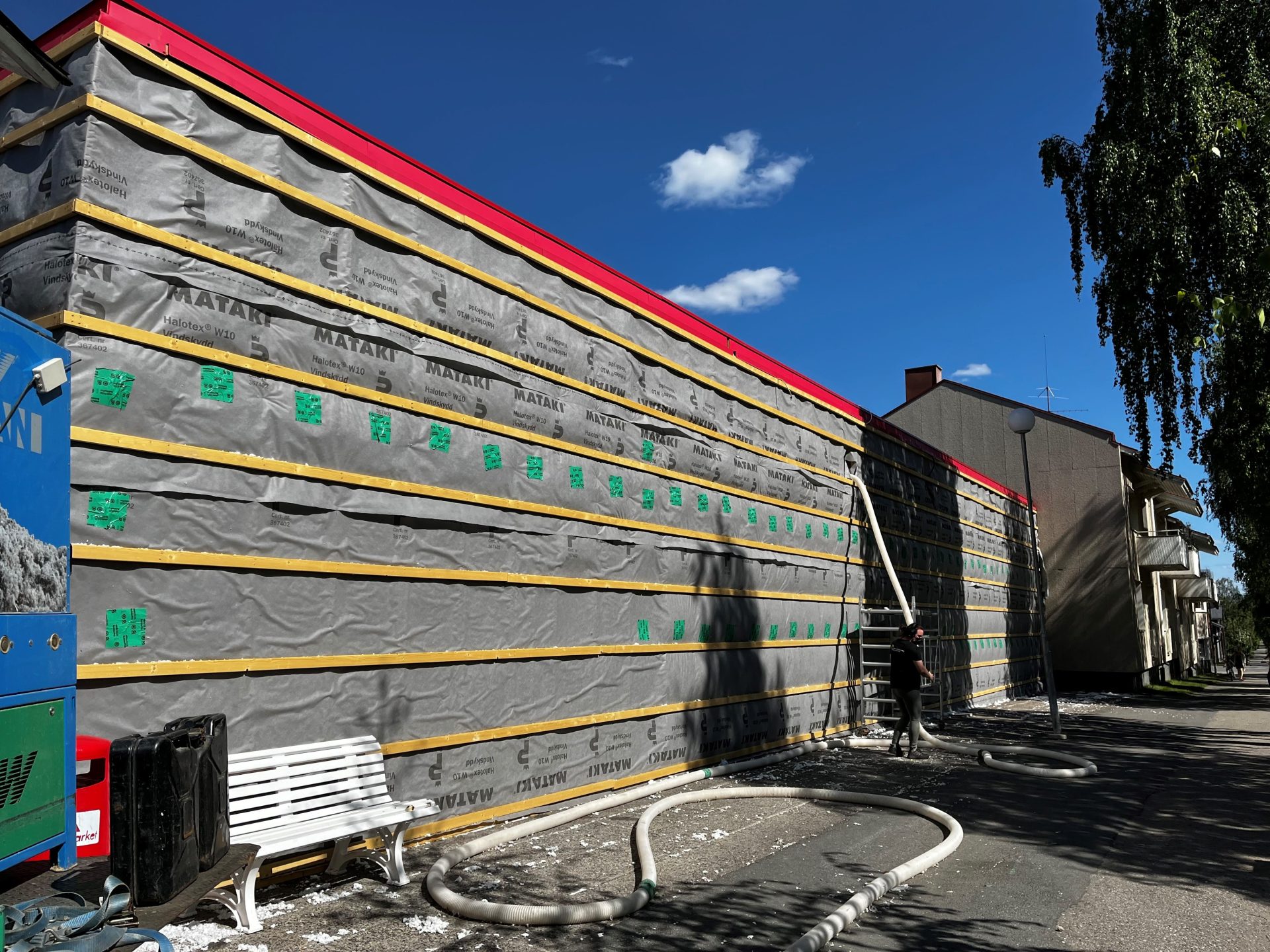
Jokkmokk municipality has an adopted local energy plan which is aiming at increasing energy efficiency and the share of renewable energy. The municipality is working together with the three neighboring municipalities Gällivare, Boden and Luleå municipalities in a governmentally financed project to promote joint energy planning. All four municipalities have leading positions in the green industrial transition, attracting investments in mining, steel, hydrogen and fertilizer production, among others. The development of an efficient and sustainable energy system to match the increased energy (mainly electricity) need will therefore be critical.
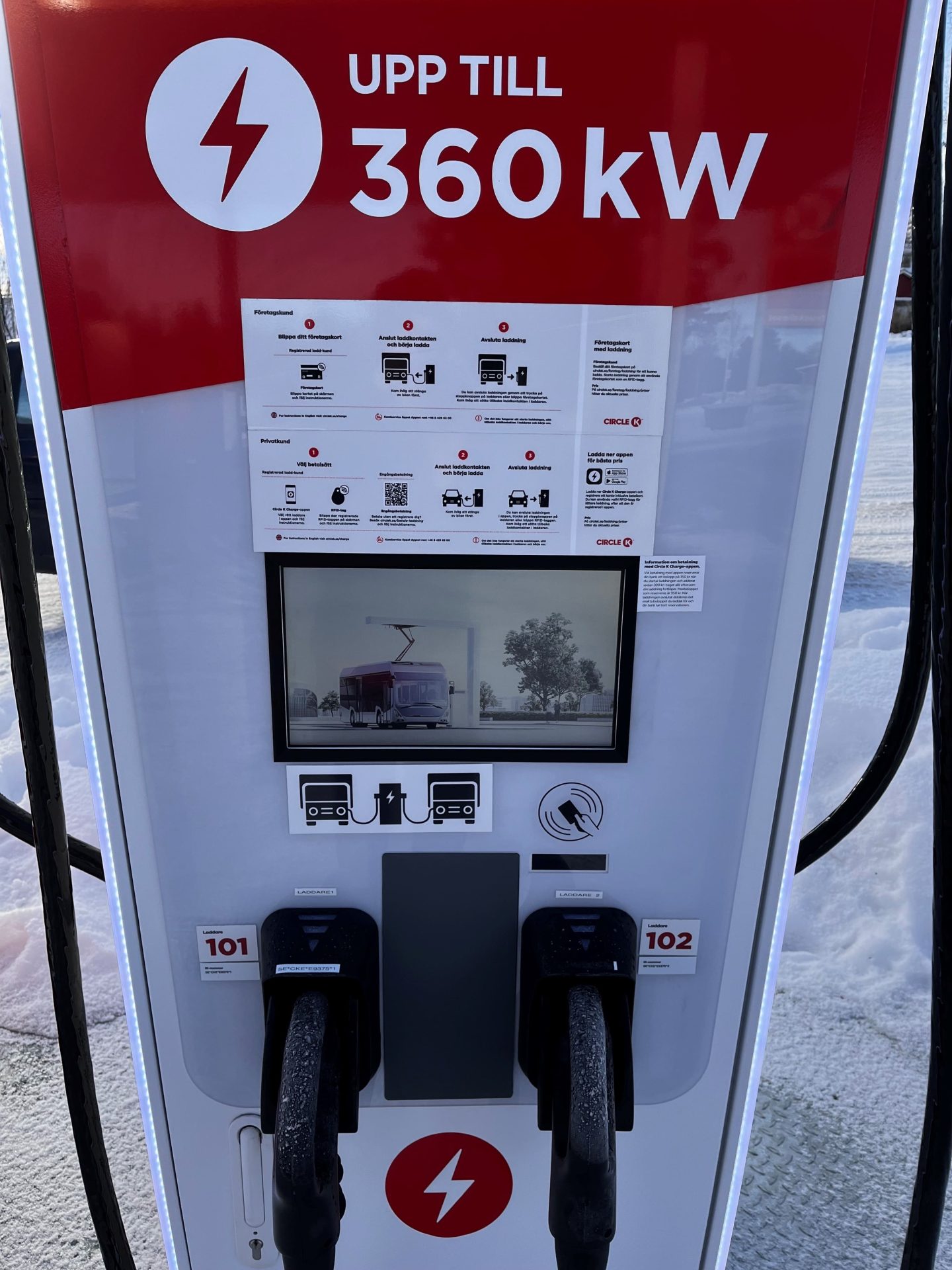
Lapland’s Municipal Association coordinates municipal energy and climate advisory services for its four member municipalities: Kiruna, Gällivare, Jokkmokk, and Pajala with co-funding of the Swedish Energy Agency. The energy and climate advisory service is free of charge and commercially independent, targeting households, businesses, housing associations, and organizations.
The CommitClimate simulator can play a key role in assessing the potential within these sectors. The simulator provides deeper insights into opportunities for energy efficiency, renewable energy, and sustainable transport in our municipalities. By using this tool, Lapplands Municipal Association and its members can pinpoint the largest opportunities and tailor advice to make the greatest impact. This helps municipalities better understand their communities’ full potential to reduce emissions and transition to sustainable energy systems.

Scenario Simulation Results
These simulations were conducted by Lapplands Kommunalförbund solely for exploratory and analytical purposes. They do not represent official projections, nor have they been adopted or endorsed by Jokkmokk municipality. Rather, these exercises serve as a basis for discussion and reflection among municipal stakeholders and may support future decision-making processes.
Municipal Buildings:
- Policy: Integrated package of building envelope upgrades, efficient lighting, appliance optimization, and renewable energy deployment (3 – 10 % annual implementation from 2025).
- Results by 2050:
- Annual energy savings: 364 MWh (1,5 %)
- Annual CO₂ reduction: 260 tons (100 %)
- Annual renewable generation: +2854 MWh
Residential Buildings:
- Policy: Combined renovation (5 – 10 %/year) and electrification strategy from 2025.
- Results by 2050:
- Annual energy savings: 3492 MWh (7,7 %)
- Annual CO₂ emissions reduction: 367 tons (100 %)
- Annual renewable generation: +20 697 MWh
Public Infrastructure:
- Policy Measures: LED lighting upgrades, efficiency in wastewater treatment and clean water preparation systems (0,5 – 3 %/year).
- Results by 2050:
- Energy savings: 409 MWh/year (33 %)
Other Sectors:
- Policy: Energy efficiency measures in commercial, tertiary, industry, construction, agriculture, forestry and other sectors (1 %/year) from 2025.
- Results by 2050:
- Annual energy savings: 28 939 MWh (21,6 %)
- Annual CO₂ emissions reduction: 115 tons (22,2 %)
Transport Sector:
- Municipal Fleet: Electrification, fleet optimization, modernization and eco-driving (0,5 %/year).
- Results by 2050:
- Annual energy savings: 547 MWh (23,2 %)
- CO₂ reduction: 109 tons (23,9 %)
- Public Transport: Mode shift to public transport (Car -3 %, Public Transport +3 %).
- Results by 2050:
- Annual savings: -87 MWh (-20,3 %)
- CO₂ reduction: -6 tons (-20,3 %)
- Private Transport: Car sharing, passenger travel demand reduction, transition to low and zero carbon emission fuels (0,5 – 1 %/year).
- Results by 2050:
- Annual energy savings: 7295 MWh (7,1 %)
- Annual CO₂ reduction: 1770 tons (9 %)
Waste Management:
- No policies were analyzed in the waste management sector. This decision may reflect limited municipal influence, lack of cost-effective measures, or prioritization of other sectors with higher reduction potential.
Local energy production:
- Policy: Heating and electricity production decarbonization, heat loss reduction and waste heat recovery from 2025.
- Results by 2050:
- Annual savings: 1330 MWh (0,8 %)
- CO₂ reduction: 114 tons (100 %)
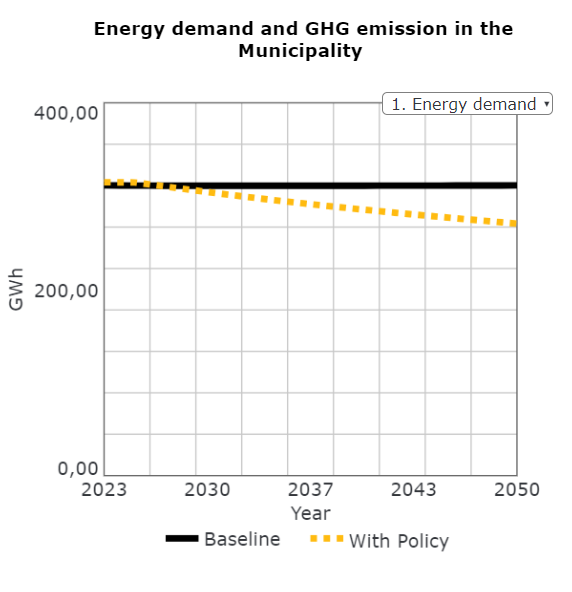
The results of the simulation show that in the baseline scenario energy demand in the municipality remains relatively stable, reaching 311,39 GWh by 2050. As illustrated in the figure below, the implementation of the selected policy package causes a gradual energy demand decrease, resulting in an energy demand of 270,43 GWh by 2050. This corresponds to energy savings of approximately 40 959,6 MWh, or 13,2 % compared to the baseline projection.
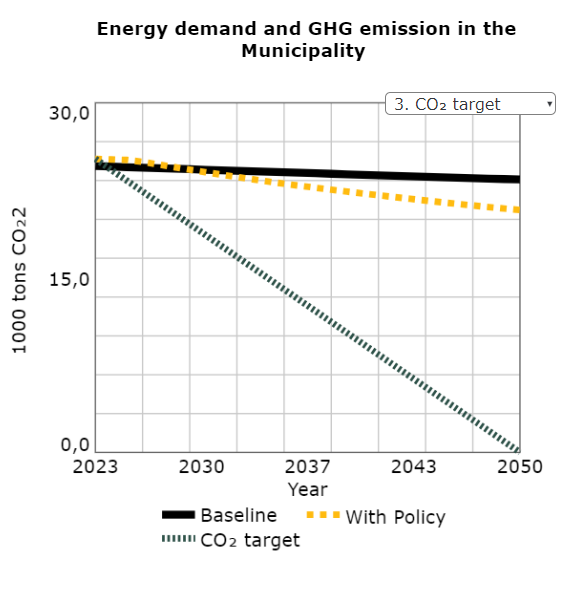
The selected policy package leads to similarly modest emission reductions – CO₂ emissions decrease from 23,4 thousand tons in the baseline scenario to approximately 20,8 thousand tons in the policy scenario by 2050, resulting in annual emission savings of 2616,3 tons (11,2 %). As shown in the figure below, while the policy scenario slightly lowers emissions compared to the baseline trajectory, emissions remain above the long-term CO₂ target, indicating that additional mitigation measures would be required to fully achieve the municipality’s climate objectives.
5. First steps implemented
Pre-Feasibility study description
Pre-Feasibility Study: Free Energy Advisory Services for Net-Zero Emissions
Lapplands Kommunalförbund has the officially mandated role in coordinating free municipal energy counselling services for Jokkmokk municipality. Therefore, we used the CommitClimate Simulator to conduct a study to explore the potential of municipal energy counselling to successful energy transition (Title: From Policy to Practice: Exploring Energy Efficiency Potentials and the Role of Municipal Counseling”) We collaborated with the local working group to:
• Explore how enhanced municipal energy counselling could contribute to long-term energy transition goals.
• Illustrate local benefits that could arise from scaling up this service, including reductions in energy demand and greenhouse gas emissions.• Identify enabling conditions and required resources to maximize impact.
This study applies the Simulator to Jokkmokk, Sweden, to explore how free municipal energy counseling can accelerate the transition to renewable energy, enhance energy efficiency, and promote sustainable transport solutions. Three scenarios are analyzed: (1) Electrification, focusing on household PV adoption and electric vehicle uptake; (2) Resilience, emphasizing decentralized energy solutions, storage, and behavioral transport shifts; and (3) Commercial Efficiency, targeting energy savings and low-carbon transport in businesses.
Findings indicate that energy counseling can significantly increase renewable energy adoption, improve energy efficiency beyond baseline scenario, and accelerate the shift to sustainable transport, leading to major economic benefits. In the residential sector, additional PV installations could generate 10.8 GWh of renewable electricity and 28.2 million SEK in local economic benefits over 30 years. Behavior-based energy efficiency measures could save up to 7.5 million kWh annually, reducing household and business costs. In transport, accelerating the adoption of electric vehicles, cycling, and car-sharing by 10 years could yield 1.48 billion SEK in fuel cost savings.
6. Stakeholder Engagement
Lapplands Kommunalförbund has played a central role in facilitating community engagement throughout the project. Acting on behalf of its member municipalities, the organisation coordinates municipal energy counselling services, which has established a broad and effective network of relevant stakeholders, including local businesses, small and medium-sized enterprises (SMEs), and citizens. This structure ensures continuous communication and dialogue channels within the community.
As part of the project, Lapplands Kommunalförbund formed a local working group comprising representatives from its member municipalities. This group has provided strategic input and facilitated local coordination efforts.
To enhance the data quality for the CommitClimate Simulator, a comprehensive citizen survey was conducted, focusing on energy use, transport patterns, consumption habits, and waste management within households.
In addition to the survey, a series of interactive workshops for citizens have been organised. These began with an engaging climate-themed event to spark public interest, followed by hands-on workshops where participants were given the opportunity to explore and test the CommitClimate Simulator directly. These activities have strengthened citizen participation, increased awareness, and provided valuable feedback for further development of the tool.