
About us

Project objectives
The project aims to support local governments in advancing their climate and energy strategies, ensuring alignment with the EU’s ambitious targets of a 55% reduction in greenhouse gas (GHG) emissions by 2030 and achieving climate neutrality by 2050. While many municipalities have made significant progress through the Covenant of Mayors initiative, gaps remain in their capacity to update and implement Sustainable Energy and Climate Action Plans (SECAPs).
To address these challenges, the project focuses on:
Enhancing strategic ambition
Encouraging political leadership to provide long-term security for businesses and citizens while unlocking investment opportunities in renewable energy (RE) and energy efficiency (EE).
Providing actionable knowledge
Delivering insights on effective measures and investments for energy savings and GHG reduction, especially in sectors not comprehensively covered by SECAPs, such as private transport, maritime transport, and industry.
Strengthening implementation capacity
Supporting municipalities in overcoming staff shortages, enhancing technical expertise, and developing harmonized energy management systems that are not solely dependent on external funding.
Boosting stakeholder engagement
Equipping local authorities with the skills to effectively engage citizens and private investors, accelerating the adoption of energy-efficient solutions.
collaboration between 10 partners from 4 Baltic Sea Region countries
Project partners
The CommitClimate consortium is a unique and dynamic collaboration between 10 partners from 4 Baltic Sea Region countries that brings together a diverse range of multidisciplinary expertise. The consortium is led by Riga Technical University, Institute of Energy Systems and Environment (IESE).
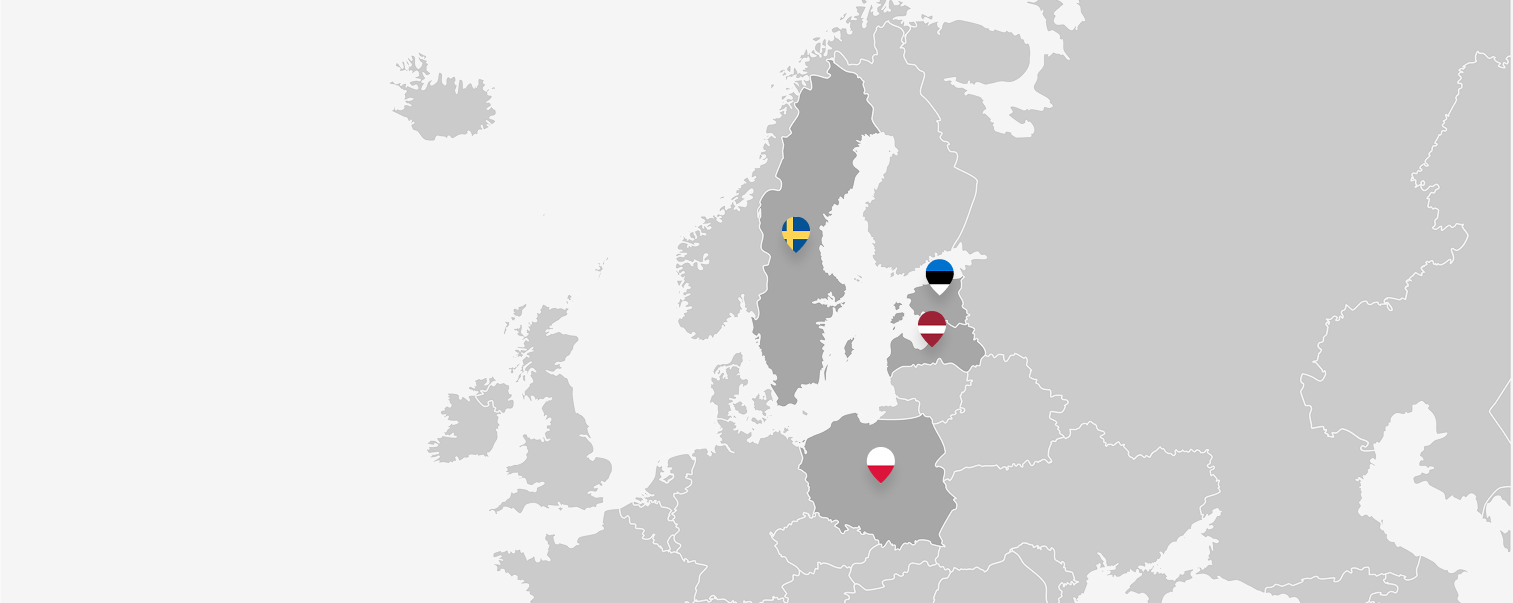
Latvia
Riga Technical University, Institute of Energy Systems and Environment
Municipality of Cēsis
Estonia
MTÜ Enerhack Foundation
Tallinn University of Technology, Department of Energy Technology
Poland
Municipality of Raciechowice
Municipality of Pałecznica
Association of Municipalities Polish Network “Energie Cites”
Sweden
Lapplands Municipal Association
Sustainable Business Hub Scandinavia AB
Who are the Stakeholders?
The CommitClimate project engages a diverse group of stakeholders essential to driving the energy transition.
Infrastructure & Public Service Providers
Organizations managing energy, transportation, and public utilities that play a key role in implementing sustainable solutions.
Local Public Authorities
Municipal governments responsible for climate action planning, policy implementation, and community engagement.
Regional Public Authorities
Government bodies overseeing broader regional strategies and coordinating climate initiatives across municipalities.
National Public Authorities
Policymakers and regulatory agencies shaping national climate policies and providing strategic guidance.
NGOs
Advocacy groups and civil society organizations supporting awareness, community participation, and sustainable policy development.
Activities and key actions
The CommitClimate project engages a diverse group of stakeholders essential to driving the energy transition:
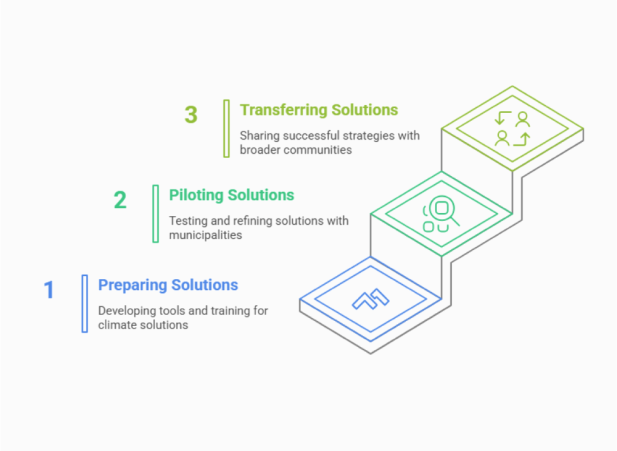
WP1: Preparing Solutions
Data Acquisition (A.1.1 & D.1.1)
Collecting relevant data from pilot municipalities to form the foundation for further analysis.
CommitClimate CO₂ Simulator Development (A.1.2 & D.1.2)
Model for assessing emissions reduction strategies.
Simulator Customization & Scenario Analysis (A.1.3 & D.1.3)
Simulator Customization & Scenario Analysis (A.1.3 & D.1.3)
Training Module Development (A.1.4 & D.1.4)
Creating a structured learning resource to guide municipalities through the energy transition process.
WP2: Piloting and Evaluating Solutions
Data Acquisition (A.1.1 & D.1.1)
Collecting relevant data from pilot municipalities to form the foundation for further analysis.
CommitClimate CO₂ Simulator Development (A.1.2 & D.1.2)
Model for assessing emissions reduction strategies.
Simulator Customization & Scenario Analysis (A.1.3 & D.1.3)
Simulator Customization & Scenario Analysis (A.1.3 & D.1.3)
Training Module Development (A.1.4 & D.1.4)
Creating a structured learning resource to guide municipalities through the energy transition process.
WP3: Piloting and Evaluating Solutions
Data Acquisition (A.1.1 & D.1.1)
Collecting relevant data from pilot municipalities to form the foundation for further analysis.
CommitClimate CO₂ Simulator Development (A.1.2 & D.1.2)
Model for assessing emissions reduction strategies.
Simulator Customization & Scenario Analysis (A.1.3 & D.1.3)
Simulator Customization & Scenario Analysis (A.1.3 & D.1.3)
Training Module Development (A.1.4 & D.1.4)
Creating a structured learning resource to guide municipalities through the energy transition process.
Transnational value
Transnational approach
A transnational approach is central to CommitClimate, ensuring solutions work across different national frameworks. By integrating diverse policies into the CommitClimate Simulator, we enhance its adaptability for municipalities across the Baltic Sea Region (BSR).
Testing
Testing the tool in various contexts allows local authorities to apply project results regardless of national differences.
Regional cooperation
The project fosters regional cooperation, promoting balanced growth and increasing the number of climate-neutral municipalities. As BSR countries navigate a fast-changing energy transition, experience exchange accelerates progress and prevents setbacks.
Transnational knowledge
Municipalities and stakeholders benefit from transnational knowledge-sharing, strengthening their capacity to implement low-carbon energy solutions effectively.