1. Municipality Profile
Key Economic Sectors
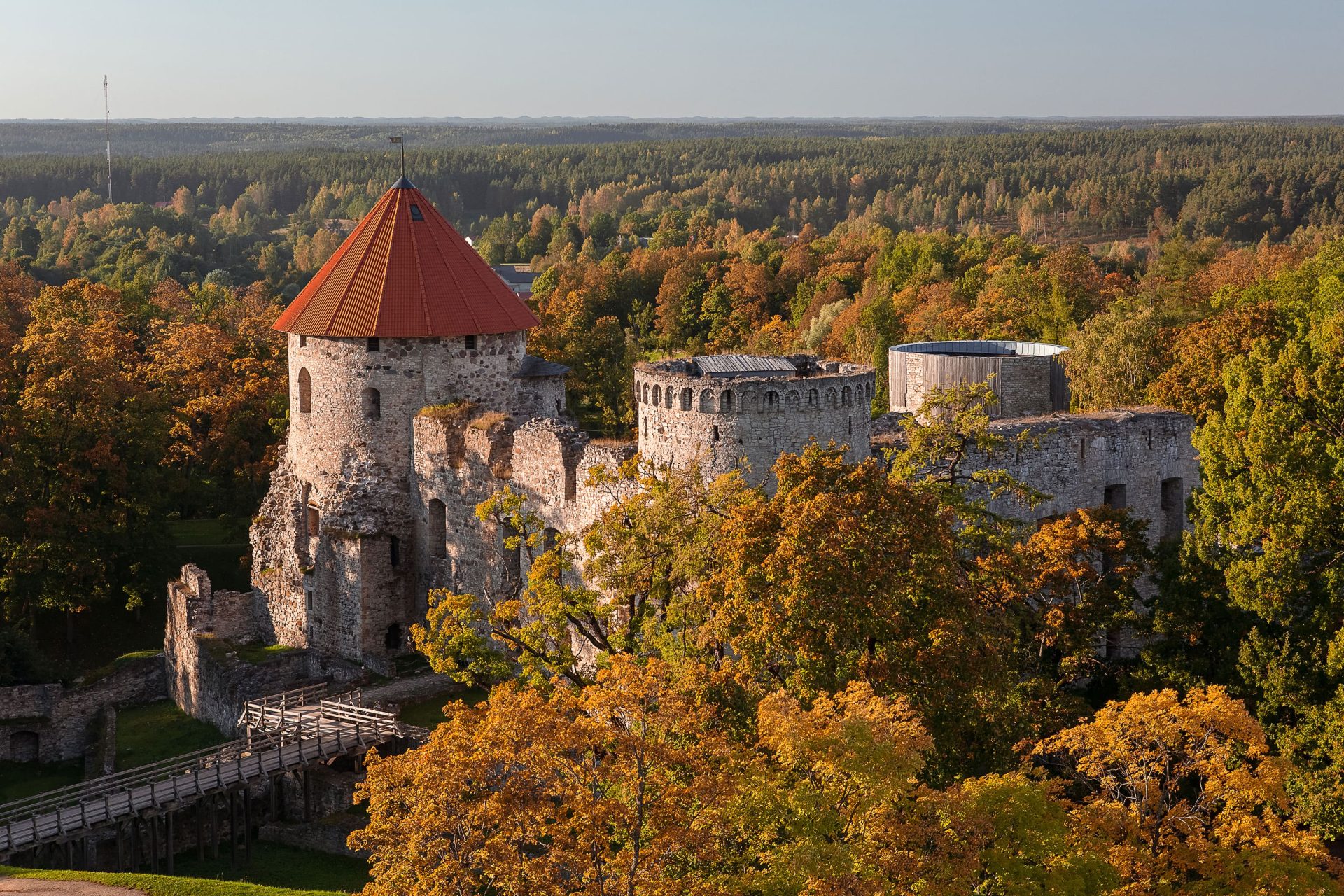
The municipality aspires to become the urban epicentre of creative and digital industries and the rural epicentre of knowledge-based bioeconomy and tourism. We safeguard our natural environment and are determined to become a zero-waste and climate positive municipality. And the establishment of Latvia’s first bioregion is an essential strategy in this regard. The development of Cēsis county is based on smart and sustainable management that promotes the uniqueness of natural values and preservation of diversity.
A total of 4655 enterprises are registered in Cēsis county. The most widely represented business sector in Cēsis county is agriculture (1144 enterprises). It is followed by retail and wholesale trade (568 enterprises), forestry (226 enterprises), transport and transportation (320 enterprises), construction and construction-related services (309 enterprises), accommodation and catering services (187 enterprises), real estate activities (139 companies), carpentry and carpentry services (136 companies), and several other less represented industries.
Governance Structure
Since the administrative-territorial reform in 2021, the municipality consists of 21 parishes. The municipality of Cēsis county works in accordance with the Law on Municipalities”. There are 19 deputies in the Cēsis County Council. The chairman of the council is the highest position, having 2 vice majors. The deputy chairperson of the council in matters of development, entrepreneurship and climate neutrality is responsible for development issues in the municipality.
2. Motivation for Climate Neutrality
Reasons for Action
Cēsis is constantly working on innovative solutions to strengthen the city’s climate resilience and adjust to the requirements of the climate change adaptation, while the city’s problem is its old town with limitations in the implementation of energy saving solutions, including deployment of renewable energy technologies. The municipality actively participates in the implementation of the European Green Deal, whose objectives include adaptation to climate change, climate neutrality, healthy waters, soil, and food. The municipality adheres to the green deal guidelines in its development activities and aids citizens and businesses for the implementation of green deal activities. According to the municipality’s Development program for 2022 – 2028, we seek to incorporate blue and green solutions in fifty percent of all municipally implemented initiatives.
The activities of Cesis Municipality are carried out in line with national, regional, and local strategic development documents. One of the goals of Latvia’s Sustainable Development Strategy until 2030 states that “The value of Latvia’s natural resources and the availability of natural environment provide a unique opportunity to develop green economy and sustainable consumption, to create and preserve Latvia’s image as a green country – an important part of the state’s international identification”.
Strategic Goals
On September 22, 2022, the municipality of Cēsis signed the Covenant of Mayors. On December 29, 2022, the Sustainable Energy and Climate Action Plan was approved. The plan includes energy and climate analysis of Cēsis town. The goal is to achieve CO2 savings of 50 % compared to 2000 by 2030.
According to the Integrated sustainable energy and climate action plan 2030, Cēsis County’s vision is to achieve climate-neutral county status by 2050. By 2030, Cēsis County undertakes to move towards the implementation of the principles of climate neutrality in the local and central heating supply of the county, to actively work on the renovation of multi-apartment and municipal buildings, as well as to continue to maintain a certified energy management system (EPS). At the same time, the local government will work on public education and wider implementation of the principles of climate neutrality in the entire county. The goals are set to promote the development and sustainability of the region, improve the quality of life and increase the well-being of the region’s residents.
3. Baseline Assessment
Data Collection Process
Data on heat energy and electricity consumption in municipal buildings (MWh/year) are available, as well as calculated specific energy consumption data (kWh/m²/year) in each building. Historical data is available. Data on the area of municipal buildings are available.
There are several boiler houses in the Cēsis county that do not have meters installed. Consumption accounting takes place after manual accounting of fuel. Installation of meters in places where this measuring equipment is not available is a priority for energy management.
Data on electricity consumption for public lighting are available (MWh/year), including in the largest sections (parks, traffic lights, fountains, etc.). Public lighting makes up about 3 % of the total municipal electricity consumption. Historical data is available. Upon request from the natural gas distribution system operator, data on natural gas consumption in municipal and state buildings is available.
Upon request, data on the electricity consumption of the household sector in the territory of the municipality is available from the distribution system operator (MWh/year). Upon request from the operator of the centralized heat supply system (municipal or private company), data on the consumption of centralized heat energy in the household sector in the territory of the county are available.
Data on natural gas consumption for heating and cooking are available upon request from the gas distribution system operator.
No data are available on decentralized heat/fuel consumption by households using biomass or fuels other than natural gas.
Upon request, data on the electricity consumption of the commercial and industrial sectors in the region are available from the distribution system operator. There is no data on the area of the buildings. The industrial sector is the largest consumer of natural gas in the territory of the municipality. Data on natural gas consumption in the industrial sector and the service sector are available in aggregate form upon request from the natural gas distribution system operator (MWh/year).
Large industrial companies must obtain polluting permits from the state and data on these companies is available from the state database. However, other companies do not have to provide the state or municipality with information on energy or fuel consumption.
Data on the municipal vehicle fleet (number of vehicles, type of fuel) are available. Cars, light trucks, mini buses, buses and other vehicles are used in the municipality. Fuel consumption and mileage data are available for municipality fleet.
Current data on the use of municipal transport, fuel consumption and mileage are available in the accounting department. 120 vehicles are included in the energy management system. In addition to municipal vehicles, there are leased vehicles that are not included in the energy management system.
Among the types of public transport in the city of Cēsis, there is public intra-city transport (with buses) and regional buses that connect the city with other areas. The public transport of the city is served by the joint-stock company CATA, from which data on fuel consumption, the number of transported passengers and passenger kilometers can be obtained upon request. Regional public transport with buses is provided by CATA and other companies.
Cēsis municipality territory is crossed by the national railway line Riga-Valka, on which both passenger and cargo diesel trains move. Information on the number of passenger train trips is available, but other data are not available.
Data on registered vehicles in the territory of Cēsis county, including by type of fuel, are publicly available from state databases. For example, in 2022, 35 electric cars were registered. Data on fuel consumption can only be obtained by calculation. It is possible to obtain information on the amount of fuel sold in the region from gas station operators upon request. There are 8 public electric car changing stations in the Cesis municipality, one for electric buses. In the future 15 more are planned to be installed.
Heat energy production
Both centralized and decentralized heat supply are used in the Cēsis district. More information is available about the city of Cēsis, which is the center of the county, than about the parishes. In the city of Cēsis, heat supply is provided by six centralized boiler houses. 75 % of heat energy is produced from RES. It is planned that it could increase to 85 % in 2030. Heat energy losses in networks is 15 %. Three-quarters of the centralized heat supply is consumed by multi-apartment buildings (residential sector). In the city of Cēsis, since 2015, all objects of centralized heat supply have been equipped with a remote data reading system. Customers have the opportunity to keep track of energy consumption data on the customer portal. Data on decentralized heat energy consumption in the private sector are not collected. Data on fuel consumption in decentralized boiler houses in the public sector are available from fuel procurement data.
Electricity production
Electricity in the district is mainly obtained from the grid. Previously, a cogeneration station also operated, but since 2017, electricity production in cogeneration is no longer taking place.
In some cases, individual electricity production takes place in households and in the public sector. Thanks to state support programs, intensive installation of solar panels for electricity production has begun. Data on solar panels installed in the household sector are not publicly available. In the public buildings sector, solar panels are installed with a total capacity of around 200 kW.
Data on the installed solar panels and the electricity produced must be requested from the distribution system operator. The municipality does not have information about the panels installed in the private sector, because their construction is not coordinated with the municipality.
The percentage of distribution of land, which includes forests, natural resources, and waters for Cesis. For agriculture, it is possible to gather data of livestock by type and quantity from the Agricultural Data Center, as well as data about aquaculture.
The CommitClimate survey has provided the municipality with important information about the energy consumption habits of the population. As well as the large number of respondents (155 answers), it shows that the public is interested in these issues, and they are important.
The results of the survey, which represent the habits of citizens in various sectors, are an important source of data that the municipality also uses outside of the CommitClimate project. The municipality of Cēsis implements the Life project Waste to Resources, in which the data of this survey is also used in various activities, analyzing the habits of residents, and the data is also used in the preparation of two Interreg Central Baltic project applications.
CO2 Emission Inventory
Sources of Emissions:
The primary sources of greenhouse gas emissions in Cēsis Municipality, based on the 2021 CommitClimate baseline inventory, include:
- Public infrastructure (0.8%)
- Transport (56.1%)
- Waste management (24.2%)
- Residential and municipal buildings (18.9%)
Total Emissions:
Total greenhouse gas emissions in the baseline year (2021) are estimated at approximately 74,800 tonnes CO₂eq.
Total Energy Consumption:
Total energy consumption in Cēsis Municipality in the baseline year is approximately 384.2 GWh/year.
4. Measures and Planning
Focus Areas
Cēsis Municipality is committed to sustainability through various initiatives, including its efforts to become Latvia’s first zero waste community and supporting local projects that promote circular economy practices and environmental impact reduction. Through the LIFE OwnYourSECAP project, the municipality is strengthening energy efficiency, renewable energy use and integrated climate action planning. Additionally, the LIFE LatEstAdapt project supports the development of a Greening Plan to strengthen climate adaptation and local green infrastructure.
Cēsis is also actively involved in developing Latvia’s first bioregion, promoting biodiversity, sustainable resource use and a green economy. The CommitClimate simulation tool complements these initiatives by supporting data-driven decision-making and scenario analysis.
Modelling results indicate that transport and residential buildings represent the largest opportunities for reducing energy consumption and greenhouse gas emissions. Private transport is the largest individual source of emissions, while residential buildings account for the largest share of total energy demand. Waste management is also a significant source of greenhouse gas emissions.
The tested policy package demonstrates substantial potential for energy savings through residential building renovation, municipal building efficiency improvements, public transport optimisation and private transport demand reduction. Municipal fleet decarbonisation also contributes to emission reductions.
Key barriers include limited municipal influence over private energy consumption and travel behaviour, existing infrastructure constraints and financing needs. However, Cēsis benefits from cross-sector collaboration, active environmental initiatives and an established municipal climate and energy planning framework.
Priority indicators include:
- Annual renovation rate of buildings
- Share of renewable energy in buildings
- Share of electric municipal vehicles
- Transport demand and modal split
- Waste generation per capita
The CommitClimate simulator supports the implementation, monitoring and future review of the municipality’s Integrated Sustainable Energy and Climate Action Plan until 2030 (IEKRP2030), helping to identify investment priorities and evaluate potential climate mitigation pathways.
Key Measures Implemented
Cēsis Municipality is the first public body to join the Zero Waste Initiative, with the goal of becoming Latvia’s first zero waste community. Since 2019, the municipality has been working with local businesses and communities, farms, and others to decrease waste in the region. The municipality has a funding program for local projects aimed at making the city more sustainable, promoting circular economies, and lowering environmental effect.
Cēsis municipality is currently engaged in the implementation of the Life programme project “Bringing Local and Regional municipalities towards owning their Sustainable Energy and Climate Action Plans (SECAPs)” (OwnYourSECAP) – a project in which the municipality of Cēsis County will participate in the adoption of good practices in the use of quality management and certification schemes for better energy efficiency and the use of renewable energy resources, as well as integrated energy and climate planning and management and in the creation of synergies, as well as develop a common Cēsis County Sustainable Energy and Climate Action Plan.
The CO2 modelling tool developed within the framework of this project will be very important in the municipality’s development planning, as it will allow the municipality to calculate CO2 emissions in its territory and then use this simulator to analyse CO2 emission reduction scenarios.
As part of the Life LatEstAdapt project, a Greening Plan will be developed in Cēsis, which will plan local-level green infrastructure and adaptation to climate change.
In collaboration with other towns, entrepreneurs, and various stakeholders, the municipality of Cēsis is presently actively working to establish the first bioregion of Latvia. The experience of bio-regions in other countries (organic districts, bio-districts) has demonstrated how it is possible to improve territories in a relatively short period of time while also contributing to the pursuit of the United Nations’ sustainable development goals, the community’s environmental policies, the impact of climate change, the reduction of CO2 emissions, the preservation of biodiversity, the development of green economy and digital economy. Creating the bioregion would ensure the advancement of issues such as responsible use of energy and natural resources (water, soil, organic substances, and air), respect for natural systems and cycles, and preservation and improvement of soil, water, and air conditions, plant and animal health and their mutual balance, use of local resources and reduction of reliance on non-renewable and external resources, and preservation of natural landscape elements.
The CommitClimate simulation tool plays a crucial role in the strategic planning of future municipal investments, particularly in the assessment of historic buildings, which is a key component of the municipality’s Sustainable Energy and Climate Action Plan (SECAP). This model furnishes the municipality with data-driven insights, enabling informed decision-making and the evaluation and modeling of potential solutions and scenarios through simulation.
Scenario Simulation Results
Municipal Buildings:
- Policy: Integrated package of building envelope upgrades, efficient lighting, appliance optimisation and renewable energy deployment (10% annual implementation rate for energy efficiency measures, starting in 2025).
- Results by 2050:
- Annual energy savings: 3,210 MWh (15.7%)
- Annual CO₂ reduction: 208 tonnes (16.0%)
- Annual renewable energy generation: 288.5 MWh
Residential Buildings:
- Policy: Combined residential renovation (5–10% annual implementation rate), electricity-saving measures and renewable and low-carbon technology deployment, starting in 2025.
- Results by 2050:
- Annual energy savings: 42,860 MWh (23.5%)
- Annual CO₂ emissions reduction: 2,557 tonnes (19.9%)
- Annual renewable energy generation: 577 M
Public Infrastructure:
- Policy Measures: Replacement of inefficient lighting, integration of renewable energy sources, improvements in wastewater treatment energy efficiency and reduction of wastewater generation (0.5–5% annual implementation rates).
- Results by 2050:
- Annual energy savings: 1,374 MWh (20.8%)
- Annual CO₂ emissions reduction: 155 tonnes (24.3%)
- Annual renewable electricity generation: 304.2 MWh
Other Sectors:
- Energy consumption and greenhouse gas emissions from commercial and tertiary activities, industry and construction, agriculture and forestry, and other activities were not included in the Cēsis baseline inventory and projections. Consequently, no policy measures were analysed for these sectors.
Transport Sector:
- Municipal Fleet: Electrification of selected non-passenger municipal vehicles, fleet modernisation, driver awareness training and improved fleet management. Efficiency and management measures are introduced from 2025 at an annual implementation rate of 0.5%, while vehicle decarbonisation begins in 2030.
- Results by 2050:
- Annual energy savings: 1,312 MWh (46.6%)
- Annual CO₂ reduction: 419 tonnes (63.0%)
- Public Transport: Operational efficiency improvements and route optimisation (2% annual implementation rate, starting in 2025).
- Results by 2050:
- Annual energy savings: 5,644 MWh (45.2%)
- Annual CO₂ reduction: 1,501 tonnes (45.2%)
- Private Transport: Car sharing and freight transport demand reduction through shorter daily travel distances and reduced travel frequency (0.5% annual implementation rates, starting in 2025).
- Results by 2050:
- Annual energy savings: 23,746 MWh (12.9%)
- Annual CO₂ reduction: 5,536 tonnes (12.6%)
Waste Management:
- Policy: Reduction of per capita waste generation (0.5% annual implementation rate, starting in 2025).
- Results by 2050:
- Annual waste generation reduction: 2,245 tonnes (11.8%)
- Annual GHG emissions reduction: approximately 222 tonnes CO₂eq (1.1%)
Local energy production:
- No policies specifically targeting local electricity or heat production, fuel substitution or energy imports and exports were tested in the Cēsis simulation.
- Electricity and district heating demand are represented in the model, but local energy production technologies were not explicitly modelled. Changes in electricity and district heating demand reflect measures implemented in other sectors rather than additional independent energy-production policies.
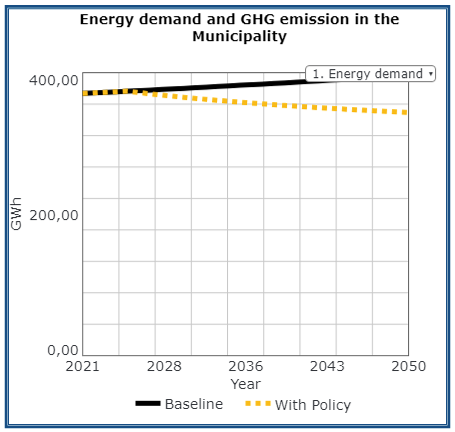
The simulation results show that total municipal energy demand gradually increases in the baseline scenario due to the assumed population growth and increasing activity levels. By 2050, total energy demand reaches approximately 409.4 GWh/year in the baseline scenario.
The implementation of the selected policy package reverses this trend, gradually reducing energy demand across the municipality. By 2050, total energy demand decreases to approximately 332.6 GWh/year in the policy scenario.
This corresponds to annual energy savings of approximately 76,771 MWh, or 18.8%, compared with the baseline projection. The largest contributions to energy savings come from energy efficiency improvements in residential and municipal buildings, complemented by demand-reduction and efficiency measures in transport and public infrastructure.
The selected policy package also leads to a reduction in greenhouse gas emissions. By 2050, annual emissions decrease from approximately 83,200 tonnes CO₂eq in the baseline scenario to 72,600 tonnes CO₂eq in the policy scenario.
This corresponds to annual greenhouse gas emission savings of approximately 10,600 tonnes CO₂eq, or 12.8%, compared with the baseline projection.
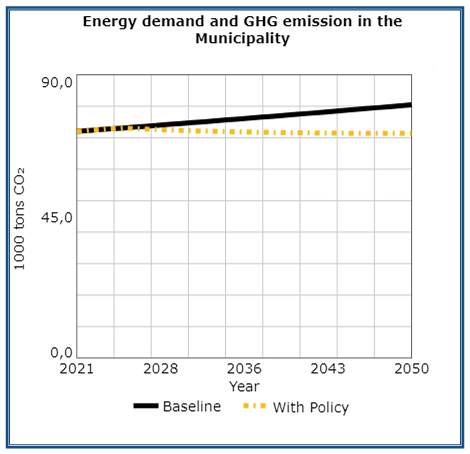
The results demonstrate that the tested measures can substantially reduce both energy demand and emissions, particularly through residential building renovation, municipal energy efficiency improvements and transport-related measures.
However, significant residual emissions remain in 2050, particularly from private transport and waste management. Additional mitigation measures, including more extensive transport decarbonisation, renewable energy deployment and measures addressing other remaining emission sources, would therefore be necessary to achieve deeper long-term emission reductions.
The modelling results provide an analytical basis for identifying priority sectors, comparing potential policy pathways and supporting future monitoring and review of Cēsis Municipality’s climate and energy planning framework.
5. First steps implemented
Pre-Feasibility study description
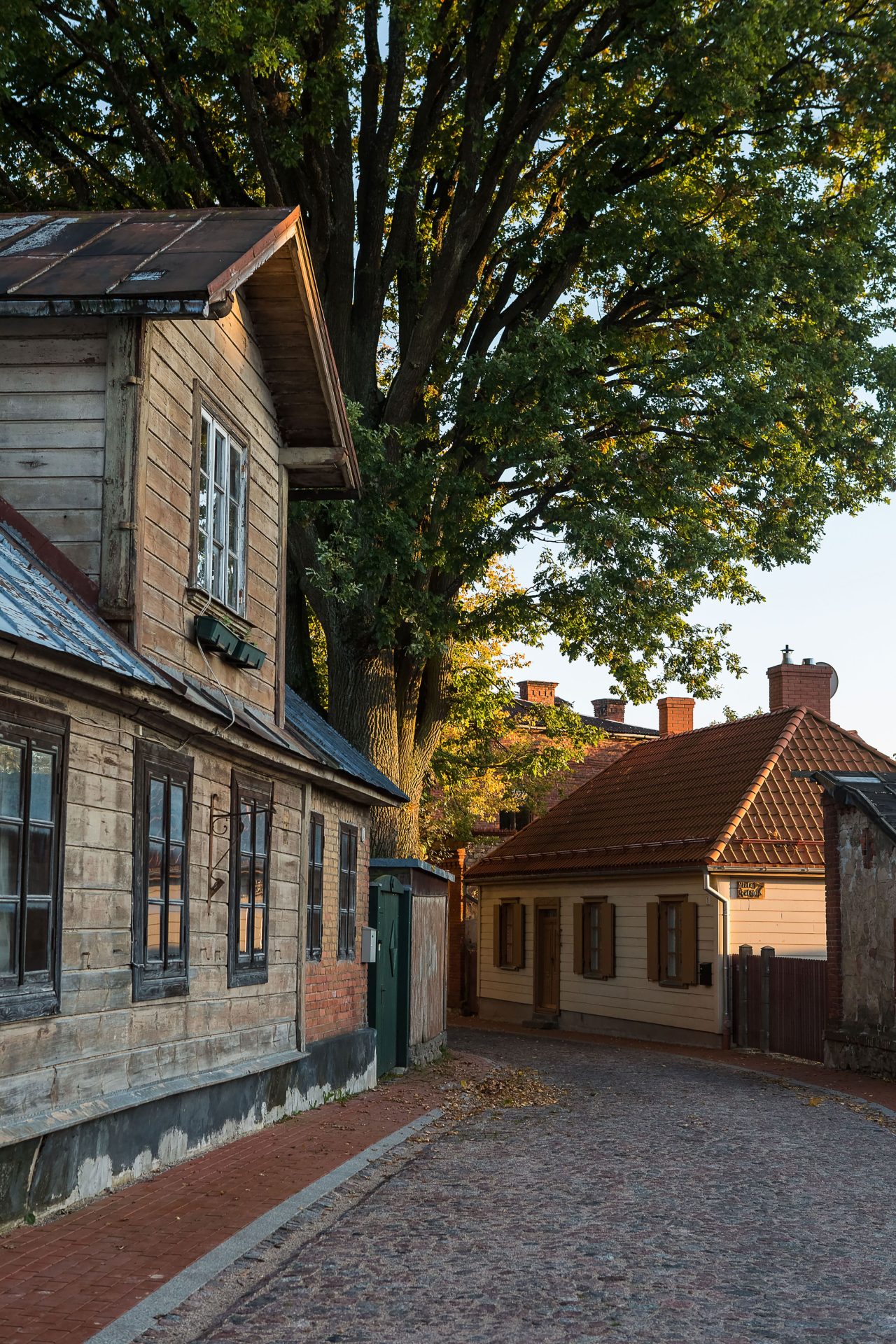
Considering that one of the priority areas of the Sustainable Energy and Climate Action Plan (SECAP) for the Cēsis municipality is the enhancement of energy efficiency in historical buildings, and given that the municipality owns a significant number of such buildings, the pre-feasibility study is specifically focused on this sector. The objective is to gather data and develop potential scenarios for improving the condition of historical buildings, including optimizing heating systems, reducing heat loss, and minimizing CO2 emissions.
A notable example is the cultural monument located on Bērzaines Street. Due to its size, structure, and other factors, planning energy efficiency measures that are proportionate to the investments and benefits is particularly challenging. This pre-feasibility study and its outcomes will serve as a foundation for future efforts with other historical buildings.
6. Stakeholder Engagement
The municipality consistently informs the public about ongoing projects, thereby raising awareness and drawing attention to climate change adaptation and CO2 reduction, which are integral to various municipal activities and projects. However, due to a lack of knowledge and data on energy consumption reduction measures and their economic impacts, the municipality anticipates that the CommitClimate model will become a crucial tool in the future. This model will aid in informing and educating the public about actions and their effects on emission reductions.
In the upcoming year, the municipality of Cēsis plans to enhance public involvement in the project, fostering more active and closer collaboration with local residents in utilizing the model and educating the community.